


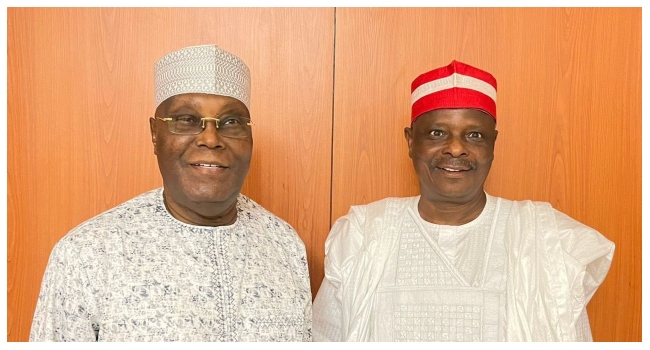
Rabiu Kwankwaso says unresolved internal issues, not conflict with Atiku Abubakar, led to his exit from the ADC
Former Kano State Governor Rabiu Musa Kwankwaso has clarified that his decision to leave the African Democratic Congress alongside Peter Obi was not driven by any personal disagreement with former Vice President Atiku Abubakar.
Also read: Keyamo Blasts NDC Southern Zoning Deal for 2027 Presidency
Kwankwaso made the clarification during an appearance on Prime Time on Monday, where he explained that unresolved internal challenges within the ADC influenced the decision.
According to the former governor, concerns over the party’s internal structure and future electoral viability forced him and Peter Obi to reconsider their positions within the platform.
“Peter Obi himself decided to leave ADC not because we are fighting with Atiku Abubakar or anybody there. We decided to leave that party because we realized that there are some issues as it stands now,” Kwankwaso said.

The politician further disclosed that the ADC was facing three major unresolved issues that could affect its ability to field candidates in future elections.
Rabiu Musa Kwankwaso also admitted that uncertainty still surrounds the party’s readiness for upcoming electoral contests, raising concerns about its long-term stability.
Addressing speculation about tensions within the opposition, the former presidential candidate dismissed suggestions of personal hostility among political actors.
Kwankwaso stressed that political competition should be viewed strategically rather than emotionally, insisting that disagreements in politics do not necessarily amount to personal conflict.
Reflecting on his political history with Atiku Abubakar, he recalled contesting against him during previous presidential primaries without animosity.
“In 2015, I contested against Atiku in the primary election; Buhari was number one, I was number two, Atiku was number three,” he stated.
Kwankwaso also revealed that he coordinated Atiku’s northern campaign during the 2019 presidential election, describing politics as “just a game.”
“I’m not fighting anybody, and I’m not expecting anybody to fight me,” he added.
Also read: Mahmud Jega Calls Kwankwaso’s Political Move Strategic Shift
The remarks come amid growing political realignments and coalition discussions ahead of the 2027 general elections.


