


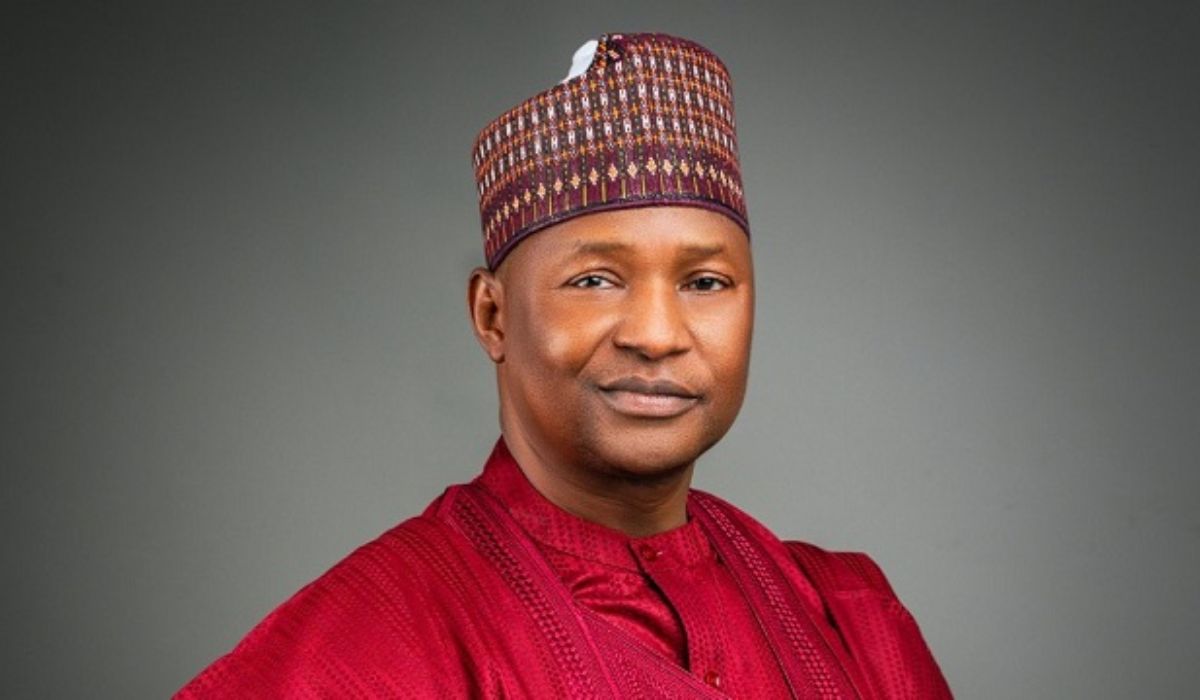
Malami EFCC case disrupts the former attorney-general’s 2027 Kebbi governorship ambition as court orders forfeiture of properties and allies express concern
Abubakar Malami, former Attorney-General of the Federation and Minister of Justice, is facing growing political uncertainty in Kebbi State after an ongoing legal battle with the Economic and Financial Crimes Commission dealt a serious blow to his ambition to contest the 2027 governorship election.
Also read: Ex-AGF Malami Granted ₦500m Bail in N8.7bn Case
The Malami EFCC case has unsettled allies and supporters across the state following his arrest in December 2025 and the subsequent court order for the interim forfeiture of 57 properties allegedly linked to him.
Abubakar Malami formally defected from the All Progressives Congress to the African Democratic Congress in July 2025 and declared his intention to seek the Kebbi governorship on a platform of political reform and economic renewal.

The declaration was initially greeted with enthusiasm by supporters, while critics dismissed the move as unrealistic.
Yahya Sarki, Chief Press Secretary to Kebbi State Governor Nasir Idris, publicly questioned Abubakar Malami’s eligibility to contest, citing integrity concerns and the pending charges.
The Economic and Financial Crimes Commission arrested Abubakar Malami on 8 December 2025 over allegations of money laundering, conspiracy and abuse of office.
The anti-graft agency is prosecuting Abubakar Malami alongside Abdulaziz Malami and Hajia Asabe Bashir in relation to alleged financial crimes amounting to billions of naira committed between 2015 and 2025.
Abubakar Malami has consistently denied the allegations, including claims involving N12 billion in illicit funds.
A Federal High Court in Abuja, presided over by Justice Emeka Nwite, recently granted an ex parte application by the EFCC ordering the interim forfeiture of 57 properties suspected to be proceeds of unlawful activity.
The court ruling intensified uncertainty within Abubakar Malami’s political camp.
Visits to his residence in Birnin Kebbi and the ADC secretariat this week showed unusually low activity, with associates declining to comment publicly on the situation.
The legal trouble comes after a turbulent political year for Abubakar Malami.
In September 2025, his convoy was attacked by suspected political thugs in Birnin Kebbi shortly after a condolence visit, an incident that left several supporters injured and vehicles destroyed.
Supporters of Abubakar Malami have rejected the accusations as politically motivated.
Mohammed Bello Doka, a media aide to Abubakar Malami, accused the EFCC of conducting a media trial and weaponising the legal process.
Former Vice President Atiku Abubakar also criticised the EFCC, alleging selective prosecution of opposition figures and warning that politicised investigations risk undermining public trust.
The African Democratic Congress in Kebbi State echoed the criticism, arguing that the prosecution was intended to weaken Abubakar Malami’s governorship bid and restrict his political activities.
Political analysts say the outcome of the Malami EFCC case could be decisive for the 2027 election.
While the law permits Abubakar Malami to contest unless convicted, the legal battle poses a formidable challenge to sustaining grassroots mobilisation and public confidence.
With Governor Nasir Idris currently facing limited opposition, observers say the unfolding case could clear the field for the incumbent unless Abubakar Malami succeeds in stabilising his political base.
Also read: Malami Kebbi governorship bid pledges bold rescue plan
Whether Abubakar Malami can remain politically relevant while defending himself in what many describe as one of Nigeria’s most consequential corruption trials remains an open and pivotal question.


