


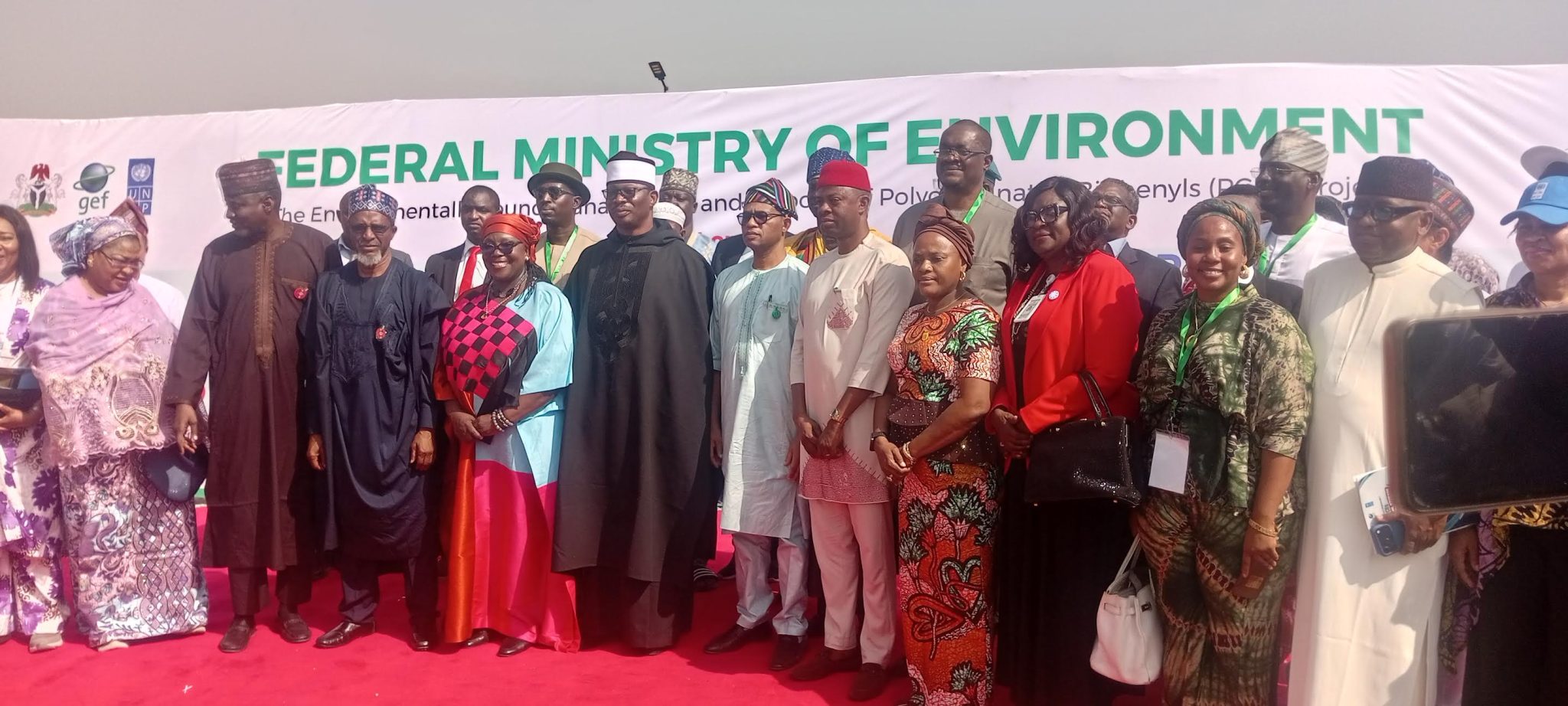
Nigeria commissions West Africa’s first PCB treatment facility to protect public health and strengthen hazardous waste management
The Federal Government has inaugurated West Africa’s first and Africa’s second Polychlorinated Biphenyls (PCB) treatment facility, reaffirming its commitment to environmental sustainability, public health protection, and compliance with global environmental standards.
Also read: Tinubu assures US, Europe on state police to boost Nigerian security
The commissioning took place on Thursday at the Sheda Science and Technology Complex (SHETSCO) in Abuja.
Speaking at the ceremony, Minister of Environment, Malam Balarabe Lawal, said the government plans to approach the Federal Executive Council (FEC) to replicate the facility across all six geopolitical zones, describing the project as critical to safeguarding public health and environmental security.

The seven-year initiative, funded with $6.3 million from the Global Environment Facility and $12.2 million in Federal Government counterpart funding, aims to safely dispose of approximately 8,000 tonnes of contaminated oil and electrical equipment, reducing health and environmental risks associated with PCBs.
Lawal explained that PCBs are highly toxic pollutants linked to cancer, reproductive disorders, and long-term ecological damage through soil, water, and food contamination.
He added that the facility demonstrates Nigeria’s commitment to the Stockholm Convention on Persistent Organic Pollutants and enhances the country’s capacity to manage hazardous waste while promoting green jobs and sustainable development.
“The facility provides a nationally accessible, compliant solution for the safe destruction of stockpiled PCB waste, fulfilling Nigeria’s obligations under the Stockholm Convention and supporting sustainable environmental practices in the power sector,” said Minister of Power, Adebayo Adelabu, who emphasised the risks posed by legacy electrical equipment containing PCBs.
Coordinating Minister of Health, Prof Ali Pate, highlighted that the project strengthens chemical and waste management systems and will improve public health outcomes.
The Minister of Innovation, Science and Technology, Dr Kingsley Tochukwu Udeh, noted that SHETSCO provided essential laboratory and engineering support to ensure the facility’s maintenance and operational efficiency.
UNDP Resident Representative, Elsie Attafuah, said the facility positions Nigeria as a regional leader in hazardous waste management, creating opportunities for skills development, technology transfer, and job creation.
Similarly, UNIDO representatives underlined the importance of effective PCB management in reducing environmental and occupational health risks.
Etsu Kwali, Luka Ayedo Nizassan III, expressed confidence in the facility’s sustainability, citing the availability of local expertise.
Experts confirmed that the facility’s dehalogenation, regeneration, and decontamination systems neutralise contaminated oil, restore it for reuse, and safely treat end-of-life transformers, preventing PCBs from entering the food chain and reducing long-term health risks.
Also read: Nigerians are not having it: PayPal’s quiet comeback bid meets fierce resistance
The Federal Government described the project as a milestone in environmental governance and a model for future hazardous waste management in West Africa, with plans to decentralise PCB treatment nationwide to ensure broader access and protection for communities.


