


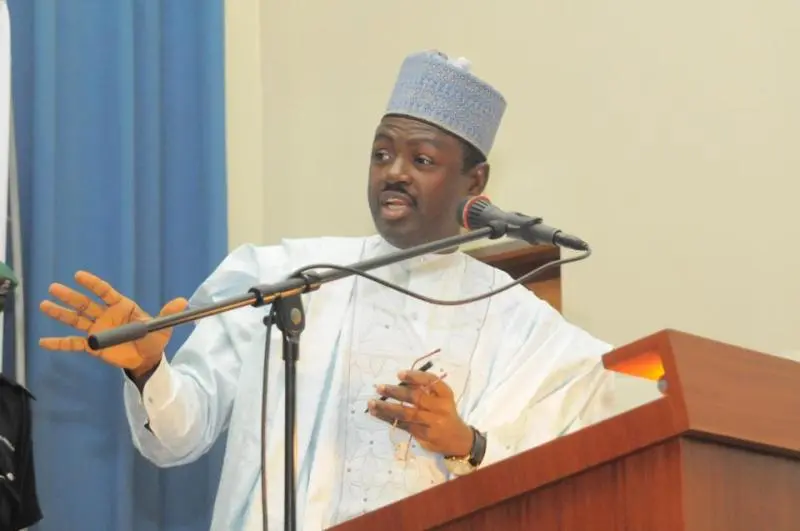
Labaran Maku joins SDP after leaving PDP, marking a notable political shift ahead of Nigeria’s 2027 general elections
Former Minister of Information, Labaran Maku, has officially joined the Social Democratic Party ahead of the 2027 general elections, marking a significant political realignment within Nigeria’s evolving opposition landscape.
Also read: Jonathan Hails Attah at Inspiring 87th Birthday Tribute
Maku’s move came on Tuesday, just a day after he announced his resignation from the Peoples Democratic Party, ending a long-standing association with the party.
The development has drawn attention within political circles, given his prominence and experience in public office.

The former minister, widely known by the sobriquet ‘Mutumin Kirki’, has held key political positions in the past, including serving as commissioner and deputy governor of Nasarawa State between 1999 and 2007.
His latest political shift is already being interpreted as a strategic repositioning ahead of what is expected to be a competitive election cycle.
Reports indicate that Maku has been under considerable pressure from supporters urging him to contest the Nasarawa North senatorial seat.
While he has not formally declared his intention to run, his alignment with the SDP is seen as a calculated step that could shape his future political ambitions.
The development underscores the gradual but steady movement of key political figures across party lines as stakeholders prepare for 2027.
Observers suggest that such defections may influence party strength and electoral dynamics, particularly in regions where individual political influence remains a decisive factor.
Maku’s entry into the SDP adds momentum to the party’s efforts to expand its national footprint, especially as it positions itself as an alternative platform for politicians seeking new alignments.
Also read: PDP Reaffirms National Secretary in Bold Move to End Leadership Crisis, Unite Party
The move also highlights the fluid nature of Nigeria’s political environment, where alliances continue to shift in response to emerging opportunities and internal party considerations.


