


S&P Global says refinery’s stable pricing is limiting imported fuel costs despite rising global gasoline prices and freight rates
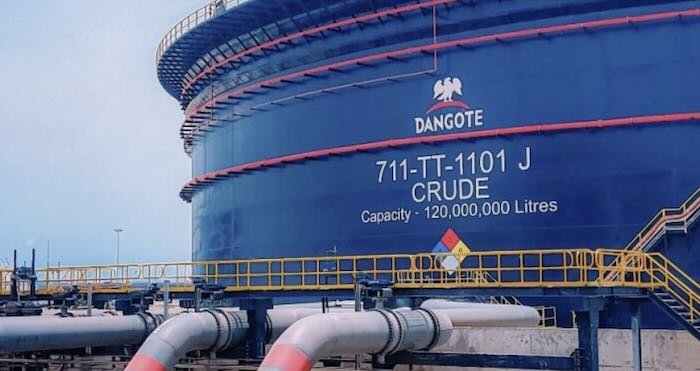
Dangote Petroleum Refinery & Petrochemicals is playing an increasingly decisive role in shielding Nigeria from global fuel price volatility, with the latest market intelligence from S&P Global Commodity Insights indicating that the refinery’s stable domestic pricing has prevented international cost increases from translating into higher fuel prices for Nigerian consumers.
Also read: Dangote Demands Investigation into NMDPRA Chief’s $5m Spending
The assessment comes as international gasoline prices, freight rates and regional supply costs continue to climb, placing mounting pressure on fuel importers across West Africa.
Yet, despite those headwinds, the Dangote Refinery Fuel Price Stability strategy has effectively capped domestic market prices, limiting the ability of importers to transfer higher costs to motorists and businesses.

According to S&P Global Commodity Insights, traders supplying the Nigerian market have become increasingly concerned by rising international replacement costs, with several market participants acknowledging that Dangote Refinery’s pricing has become the benchmark against which imported products are measured.
One trader told S&P that gasoline prices in Nigeria are effectively being “capped by Dangote prices”, making it increasingly difficult for importers to remain competitive as global costs rise.
Another market participant observed that while gasoline meeting Ghanaian specifications currently commands stronger premiums, Nigerian specification cargoes remain under pressure because Dangote Petroleum Refinery has kept its coastal sales prices unchanged despite higher international product values.
“Lomé values have risen above Dangote sales prices, which has shut the arbitrage,” the trader said, highlighting how imported fuel has become commercially unattractive under prevailing market conditions.
The development reflects a broader shift in regional petroleum trading, where international market forces are increasingly colliding with the growing influence of domestic refining capacity in Nigeria.
S&P Global also reported a sharp increase in freight costs, noting that the cost of transporting clean petroleum products from Northwest Europe to West Africa rose from US$29.70 per metric tonne at the end of June to US$37.12 per metric tonne as shipping companies repositioned vessels to alternative markets.
At the same time, tighter diesel supplies resulting from reduced exports of Russian Black Sea cargoes have pushed prices higher across West Africa, adding another layer of cost pressure for fuel importers.
Against that backdrop, Dangote Petroleum Refinery has continued to pursue a gradual price moderation strategy rather than reacting immediately to short-term movements in international oil markets.
Since the end of May, the refinery has reduced the ex-depot price of Premium Motor Spirit by more than ₦200 per litre, Automotive Gas Oil by ₦300 per litre, and Jet A1 aviation fuel by ₦520 per litre, even though much of the crude processed during the period had been purchased when global oil prices were considerably higher.
The refinery has consistently maintained that its pricing reflects the actual cost of crude acquired under commercial supply contracts, rather than daily fluctuations in Brent crude prices.
According to the company, crude oil purchases are typically concluded weeks or months before refining, using pricing mechanisms linked to monthly average benchmarks.
Energy analysts say the latest findings reinforce the strategic value of Nigeria’s investment in large-scale domestic refining, particularly at a time when geopolitical tensions, tighter global fuel supplies and higher shipping costs continue to disrupt international energy markets.
Had Nigeria remained heavily dependent on imported petroleum products, the combination of higher international gasoline prices, elevated freight charges and rising regional trading values would likely have translated into substantially higher domestic pump prices.
Instead, analysts argue that Dangote Refinery has emerged as a powerful stabilising force, helping to moderate fuel costs while reducing the country’s exposure to volatile international supply chains.
The report also suggests that the refinery’s commercial influence now extends beyond Nigeria.
With gasoline prices at regional trading hubs such as Lomé exceeding Dangote’s domestic sales prices, market participants increasingly regard the refinery as a pricing reference point for petroleum products across West Africa.
That growing influence reflects one of the central objectives behind the establishment of the 700,000-barrel-per-day refinery: reducing dependence on imported fuel, conserving foreign exchange, strengthening energy security and providing greater price certainty for consumers and businesses.
The refinery’s impact has become more pronounced over the past year as Nigeria continues to transition from decades of import dependence towards domestic refining.
The shift has coincided with broader reforms in the downstream petroleum sector aimed at creating a more market-driven pricing environment while expanding local production capacity.
Also read: Reps call for urgent intervention in Dangote refinery dispute
As global fuel markets continue to face uncertainty from supply disruptions and rising logistics costs, the latest S&P Global assessment suggests that Nigeria’s largest refinery is not only reshaping the country’s energy landscape but also providing a valuable buffer against external price shocks that would otherwise be felt across households, transport operators and industry.


