


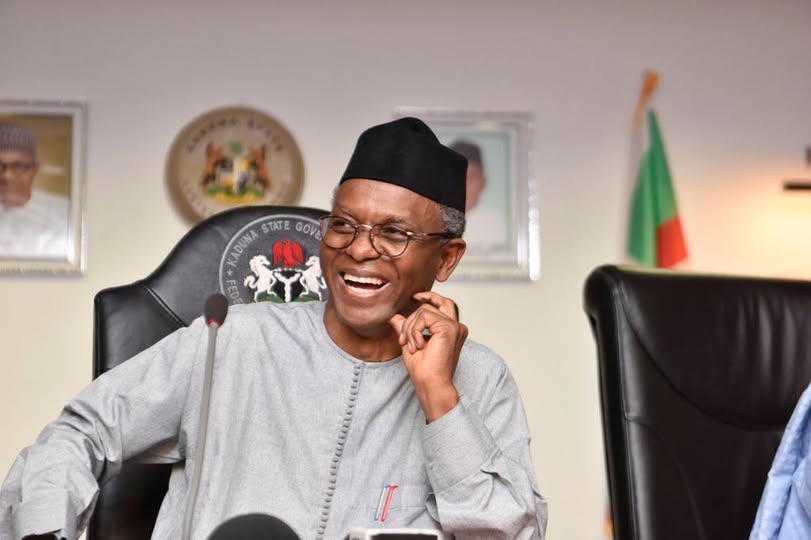
Former Kaduna governor Nasir El-Rufai cites political bias as reason for silence in ICPC probe, pledging to respond only in court
Former Kaduna State governor Nasir Ahmad El-Rufai has defended his refusal to answer questions from the Independent Corrupt Practices Commission (ICPC), describing the probe as politically motivated.
Also read: ICPC Seizes Documents, Devices from Nasir El-Rufai’s Abuja Residence
The former governor said his decision to remain silent was both deliberate and constitutional, insisting he would only address allegations in a court of law.
El-Rufai presented two handwritten statements under caution on 19 and 20 February 2026 while in ICPC custody, in the presence of his lawyer, Ubong E. Akpan.

In his first statement, El-Rufai outlined his background, noting his career in quantity surveying, telecommunications, and public service, including his tenure as Director General of the Bureau of Public Enterprises (1999–2003), Minister of the Federal Capital Territory (2003–2007), and two-term Governor of Kaduna State (2015–2023).
“I am a leading member of the African Democratic Congress (ADC), the only surviving opposition party in Nigeria, which is the real reason you are investigating me,” El-Rufai wrote.
“In response to your question (and indeed all your questions), I have, on the advice of counsel, decided to exercise my right to silence. I will respond to any allegations in a court of law only.”
In a follow-up statement on 20 February 2026, the former governor reiterated that he would reserve his constitutional right to silence for all further documents and questions, affirming that judicial scrutiny alone can determine the legitimacy of the investigation.
El-Rufai may regain his freedom on Thursday if the ICPC fails to file charges before the expiration of the 14-day court-approved remand order, which lapses on 5 March 2026.
Also read: ICPC Seizes Sensitive Documents, Wiretapping Gear from El-Rufai
Legal analysts note that El-Rufai’s stance reflects a broader debate over the use of anti-corruption probes in Nigeria and the fine line between accountability and political persecution.


