


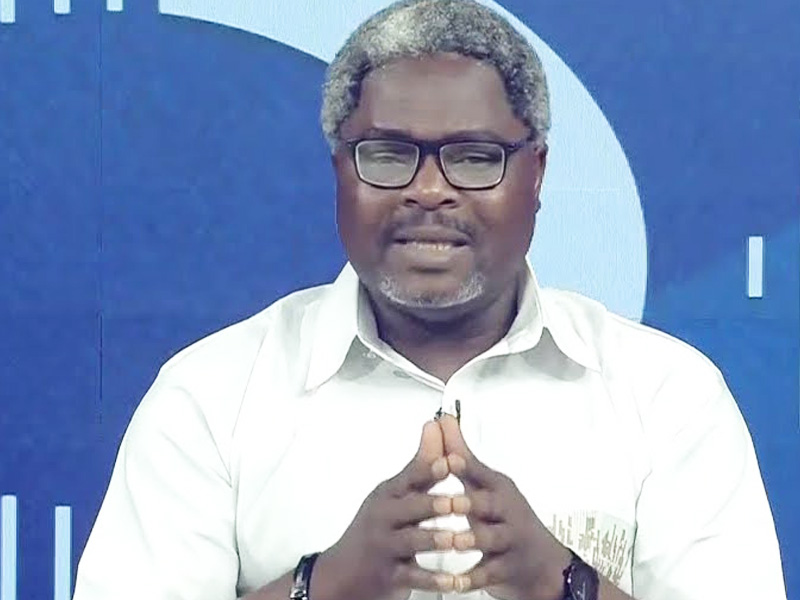
Lere Olayinka says not all 2027 presidential candidates are seeking victory, questioning the chances of Sowore and Peter Obi’s NDC
The Senior Special Assistant to the Minister of the Federal Capital Territory, Nyesom Wike, on Public Communications and Social Media, Lere Olayinka, has said not all 19 presidential candidates expected in Nigeria’s 2027 election are seriously competing for victory.
Also read: Boko Haram Ambushes Borno APC Governorship Candidate
Olayinka made the claim during an interview on Arise News on Friday, September 4, 2026, while discussing the growing field of presidential contenders and what he described as the importance of political structure in winning a national election.
His comments come as political parties and opposition groups continue to position themselves ahead of the 2027 presidential contest, with several prominent figures expected to challenge President Bola Ahmed Tinubu.
Olayinka argued that the presence of a candidate on the ballot does not automatically mean that candidate has a realistic expectation of winning.

“So it is not everybody that contests elections that wants to win. There are people that contest elections just to register their presence,” he said.
The Wike aide singled out African Action Congress presidential candidate Omoyele Sowore, using his performance in the 2023 presidential election to question his prospects in 2027.
Olayinka noted that Sowore secured about 14,600 votes in the 2023 election and argued that a significant improvement would be required for him to become a serious contender for the presidency.
“For instance, the candidate of AAC, Omoyele Sowore, had 14,600 votes in 2023. How would that person win the election next year? They know that they cannot win the election. They are just contesting,” he said.
Sowore, an activist and former presidential candidate, has remained a prominent voice in Nigeria’s opposition politics and is expected to campaign on the platform of the AAC.
Olayinka also questioned the electoral prospects of the Nigeria Democratic Congress, the political platform associated with former Anambra State governor Peter Obi.
He argued that winning a presidential election requires more than national popularity, pointing to the need for a broad political structure capable of operating effectively across the country’s polling units.
“Even NDC, the party of Peter Obi, they know they cannot win the election. They are just contesting to try to register their presence,” Olayinka said.
Peter Obi remains one of the most prominent opposition figures following his strong performance in the 2023 presidential election, when he contested on the Labour Party platform.
His movement into the NDC has subsequently become a major talking point in the preparations for 2027, particularly as opposition politicians seek to build a coalition capable of challenging the ruling All Progressives Congress.
Olayinka maintained that presidential candidates need strong grassroots organisation to translate support into votes on election day.
According to him, parties must have sufficient agents, mobilisers and other structures operating at polling units across the country.
The argument reflects a long-standing feature of Nigerian elections, where campaign popularity must be matched by organisational capacity, voter mobilisation and effective representation at polling stations.
However, political support can shift considerably before an election, meaning early assessments of a candidate’s chances do not necessarily determine the eventual outcome.
The 2027 contest is still developing, with parties expected to intensify their campaigns and political alliances as the election approaches.
Olayinka’s remarks therefore add to an increasingly competitive political conversation over which of the emerging presidential candidates have the organisation, national reach and voter support required to mount a credible challenge for the presidency.
The expected presence of numerous candidates is likely to create a crowded ballot in 2027, although the eventual list will depend on party nominations, electoral requirements and the final political alignments ahead of the election.
For the major contenders, the central challenge will be converting political visibility into a nationwide electoral organisation.
Also read: Boko Haram Ambushes Borno APC Governorship Candidate
As campaigning gathers momentum, the strength of party structures, alliances and grassroots mobilisation is likely to become just as important as the individual popularity of presidential candidates.


