


The hall wore a robe of expectations as minutes ticked towards the hour. The city was wrapped in the mood of impending festivity. Something was in the air. Road safety personnel and armed policemen were on duty—directing traffic and maintaining orderliness along Woji Road.
Also read: Aisha Yesufu Blames Constitution for Certificate Disputes
A walk into the event hall felt like an excursion into a carnival. From the urbane music equipment emitting jazzy tunes, to the symmetrically-arranged seats, the arty wall decorations, and the storybook backdrop, poetry was on display.
Outside, directly opposite the car park, a massive poster announcing the event in the making—the Annual Wole Soyinka Lecture with a life-size portrait of the literary legend—exhibited what was about to unfold.

The imposing poster also indicated two other persons—the technocrat extraordinaire, Chief Ndutimi Alaibe, as chairman of the day, while the former Aviation and Aerospace Development Minister, Chief Osita Chidoka—was the guest speaker.
Indeed, almost the entire Port Harcourt—a city of political frenzy, soaked in oily wealth but surrounded by shantytowns—was in colourful feel of expectancy, as it awaited the arrival of Akinwande Oluwole Babatunde Soyinka, Africa’s first Nobel Laureate in Literature.
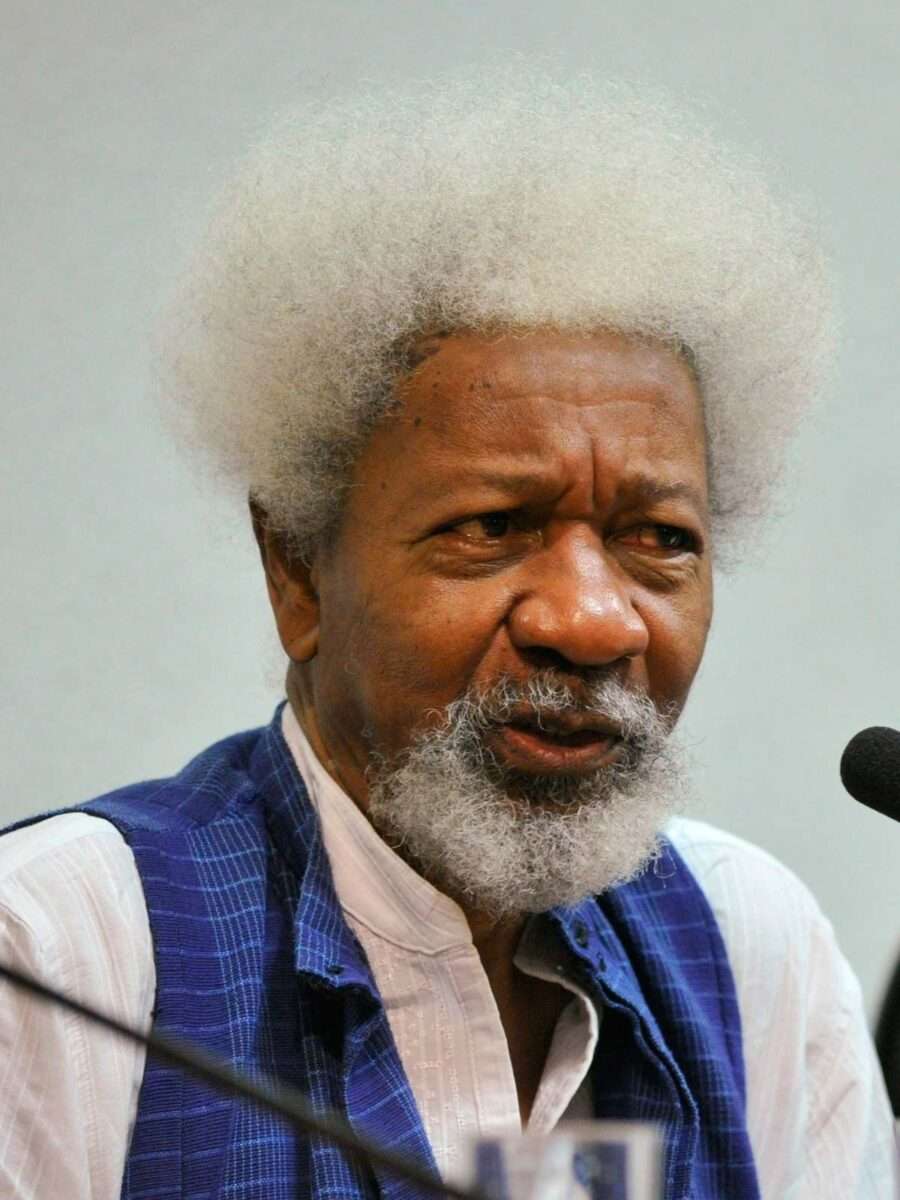
Then almost surreptitiously, the literary idol walked into the hall unannounced. Except for his traditional white hair, the big smile, and the hawk-like penetrating eyes, the hall almost missed his entry. Eventually, everyone rose in honour of the reverential figure—the father of modern political literature.
The 92-years old, with a deep voice, was in the city not just to attend a lecture in his honour, but to participate in a highbrow yearly ritual of the National Association of Seadogs, also called Pyrates Confraternity—a body of intellectual militants founded by him several decades ago.
It turned out to be quite an explosive event. Chairman of the summit, Chief Ndutimi Alaibe, known simply as ‘Timi, paid extensive tributes Wole Soyinka before setting the tone for the lecture that triggered off wide-ranging discussions.
‘Timi told the audience that Nigeria is immeasurably better today because of people like Soyinka who, throughout his remarkable journey, has consistently chosen the harder path—the path of conscience, courage, and truth—when silence could have been safer, easier, and far more rewarding to him.
Labelling the scholarly sage as a man with generosity of spirit and loyalty to friends, he applauded Soyinka’s readiness to encourage worthy causes, and the extraordinary willingness to show up whenever principle, rather than prominence was needed.
He declared, “Today, we honour you not merely with words, but with our presence and our shared commitment to engage the very questions your life has posed to our nation for more than six decades—questions of justice, accountability, freedom, and the moral courage required to build a truly democratic society.”
Besides, the lecture, the event was also a celebration of those described as the National Association of Seadogs Martyrs—a group comprising members of the confraternity arrested on February 17, 1997, imprisoned and tortured by the military in Rivers State on accusation of undue radicalism.
Their ordeal, which lasted 72 days, stated Dr Joseph Oteri, the confraternity leader, was an unplanned journey into the darkest hell of the late General Sani Abacha’s regime, “for daring to believe that Nigeria deserved better than the boot of a dictator,” until they were freed by a court of law.
‘Timi noted that the arrest and prosecution of the Pyrates was basically “for refusing to be silent in the face of oppression” describing the victims as “enduring symbols of resilience and civil courage in the struggle for the restoration of democracy and the rule of law.”
He said the anniversary of the event reminded everyone that democracy not freely bestowed; but was won through the sacrifices of countless Nigerians –many celebrated, many unsung—who endured intimidation, persecution and personal loss in defence of freedom, justice and accountable governance.
Going down memory lane, he mentioned other martyrs of democracy to include “Dele Giwa, whose fearless journalism challenged military authoritarianism until it claimed his life, Ken Saro-Wiwa and the Ogoni Nine, whose martyrdom awakened the world’s conscience to environmental justice and human rights, Kudirat Abiola, whose courage sustained the struggle to reclaim a stolen democratic mandate.
“We remember Chief Alfred Rewane, whose unwavering commitment to democracy cost him his life. And we remember Chief Bola Ige, Nigeria’s former Attorney-General and Minister of Justice, whose assassination remains, to our enduring national shame, unresolved.”
Then he added: “Whether through imprisonment or assassination, torture or intimidation, these men and women bore heavy personal burdens so that future generations might live under the rule of law rather than the rule of fear.
“Their stories remind us that civil courage is not an abstract ideal. It is rather the willingness to stand for what is right, even when the consequences are severe and deadly.
“As we honour their memories today, may we also recommit ourselves to completing the work for which they sacrificed so much—building a Nigeria founded on justice, accountability, constitutional governance and respect for the dignity of every citizen.”
The hall sat in silence, except for intermittent applauses and fulfilled smiles from Soyinka as ‘Timi recalled rare moments of encounter with the erudite professor several years ago—a part of four decades of relationship that has profoundly shaped his understanding of what Soyinka means to Nigeria.
He mentioned an instance of close interaction in 2006 when, under the auspices of the Commission of Nobel Laureates, Soyinka was part of an international mission that visited the Niger Delta to promote peaceful dialogue and undertake a fact-finding exercise in the region—including a visit to the Niger Delta Development Commission, where ‘Timi served.
He recalled that after listening to their presentation, Soyinka remarked that the NDDC had taken on an enormous burden on behalf of a beleaguered region and deserved to be remembered as one of the positive initiatives of the Obasanjo administration, adding with characteristic generosity, “I will remember to commend him when next I see him.”
Two years later, ‘Timi’s late wife, Alaere, extended an invitation to the revered literary czar who was then in the United States, immersed in an exceptionally demanding schedule, to visit ‘Timi’s village of Igbainwari in Opokuma, Bayelsa State, to inaugurate the Wole Soyinka Library—an initiative of Alaere’s organisation, Family Reorientation, Education and Empowerment (FREE).
He revealed that what made that visit even more remarkable was that Soyinka “did not merely fly in to perform a ceremonial duty and depart. He chose to spend the night in our modest country home in that remote riverine community.
“For a man of such global stature—a Nobel Laureate whose voice commanded respect across continents—it was an extraordinary act of humility. Let me add that he also tried Izon local brew.
“By his presence, he honoured not only our family but also an entire community that had long felt disregarded, affirming that no place is too small, and no people too insignificant, to deserve dignity, learning, and hope.
“He spoke with genuine admiration of my late wife’s vision, courage, and steadfast determination, recognising in her work a powerful testament to what conviction and selfless service can accomplish. He said ‘I am not often impressed with people, but she has succeeded in impressing me with her drive, her vision and her total commitment.’”
‘Timi noted that Soyinka created more impact during that visit when he spoke to the youth of the Niger Delta whose militancy at that time had emerged as one of the defining challenges confronting the Niger Delta.
Soyinka offered a wise counsel urging them to choose dialogue over violence and a future built on peace, not conflict.
With characteristic moral clarity, he challenged them to embrace “intellectual militancy in pursuit of the region’s development—a powerful call to exchange the force of weapons for the power of ideas, knowledge, and constructive engagement.”
By his confession, ‘Timi’s reminiscences were not merely out of nostalgia, but because they spoke directly to the event of the day, or as he put it, long before “reclaiming the state” became a familiar phrase, Soyinka was already living it’s meaning.
Or how would you describe a man of Soyinka’s standing journeying to a remote community which many considered too insignificant to matter, just to inaugurate a library and spend a night among strangers without ceremony or pretence, in an environment of budding militancy—with violence on parade.
Soyinka’s act simply affirmed that the true measure of leadership is not the distance one travels, but the willingness to stand with people wherever they are. ‘Timi described this as principled leadership and accountability exercised with wisdom and humility.
On the of the theme: “Reclaiming the Nigerian State through Accountability, Justice and Civil Courage” the former managing director of NDDC said it speaks directly to the realities of the Nigeria—a country we inhabit and the nation we aspire to build.
His words: “Nigeria is blessed with extraordinary human talent, abundant natural resources and remarkable resilience. Yet we continue to fall short of our collective potential. Our national challenge has never been a lack of diagnosis; it has been a failure to act consistently on what we already know.”
It was his view that too often, the institutions designed to hold power accountable have been weakened, thus making justice, for many Nigerians, a privilege rather than their inalienable right.
Restating the virtues of the confraternity, he said: “This gathering cannot, in good conscience, speak of reclaiming the Nigerian state without confronting one of the cardinal evils that the National Association of Seadogs was founded to repudiate.”
That evil, called tribalism, has birthed partisanship, clannishness, ethnic chauvinism and statism, while the enduring values of nationalism, absolute honesty, absolute selflessness, and love for all have been neglected, said ‘Timi.
He asserted that, tribalism has become less an individual prejudice than a systemic condition, coursing through Nigeria’s national bloodstream and eating away at the very fabric of our society.
He noted that reclaiming the Nigerian state must therefore begin with reclaiming ourselves—by ensuring that the principles we so proudly profess are applied consistently, without fear or favour, irrespective of tribe, political affiliation, or the identity of those who wield power.
Ultimately, he said, “accountability is sustained not by laws alone but by the courage of men and women who insist that those laws apply equally to the powerful and the powerless.”
His position was that reclaiming the Nigerian state would not be achieved by a single dramatic event, but through the steady accumulation of principled choices by citizens who refuse to be indifferent, institutions that remain faithful to their mandates, and leaders who choose integrity over expediency and courage over convenience.
Falling back on his modest experience in public service, ‘Timi said the journey has reinforced one enduring lesson in him, that sustainable development cannot exist without accountability, and that where institutions are weak, hope gives way to cynicism; where accountability is upheld, even limited resources can produce lasting impact.
Also read: Aisha Yesufu Blames Constitution for Certificate Disputes
He urged participants to see beyond the event of the day as they aim to rebuild Nigeria, knowing that “nations are not reclaimed by rhetoric alone,” rather, they are reclaimed “when conscience triumphs over convenience, when institutions are stronger than individuals, and when citizens summon the courage to do what is right, even when it is difficult.”


