


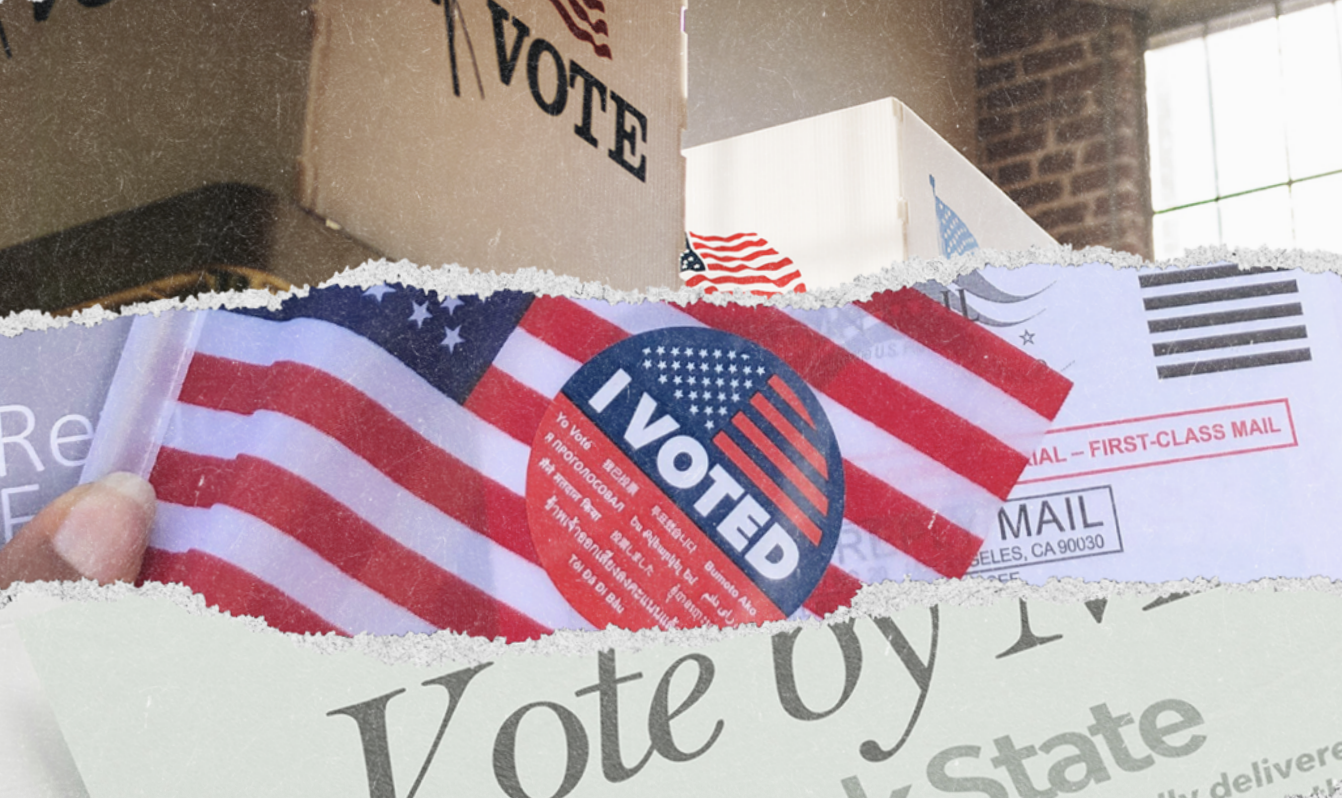
Trump election interference fears grow ahead of the US midterms as states prepare for federal monitoring, legal challenges and disputes over vote certification
US President Donald Trump is facing growing scrutiny over potential election interference ahead of the November 3, 2026 midterm elections, with state election officials, voting rights organisations and political leaders raising concerns about possible federal intervention in voter registration, polling operations and the counting and certification of results across the United States.
Also read: President Tinubu Departs for Mecca to Pray for Nigeria
The concerns come as Trump’s Republican Party faces a closely contested battle to retain control of Congress, with the outcome of several competitive races potentially determining the balance of power in Washington during the final two years of his presidency.
Although the White House maintains that its actions are intended to protect election integrity, the administration’s expanding involvement in state election affairs has prompted questions about the limits of presidential authority and the independence of local election officials.
The United States Constitution gives state governments primary responsibility for administering congressional elections, while Congress retains the power to regulate aspects of the electoral process.

The president has no direct constitutional authority to take over the administration of state elections.
Nevertheless, several developments have placed the administration’s approach under renewed scrutiny.
One major area of concern involves the Justice Department’s efforts to obtain complete voter registration records from states.
Since 2025, the department has sought access to unredacted voter lists containing sensitive personal information, including dates of birth, addresses, partial Social Security numbers and driving licence details.
The administration says the information is necessary to identify potentially ineligible registrations, particularly those involving non-US citizens.
The Justice Department has filed lawsuits against 30 states and the District of Columbia after officials declined to provide the complete records.
However, the National Conference of State Legislatures reported in October that numerous federal courts had dismissed the department’s requests, with several appeals still ongoing.
A separate development involving California has intensified the dispute.
The Justice Department alleged that more than 20,000 people it considers likely to be non-citizens appeared on the state’s voter registration lists and sought action against ballots associated with some of those individuals.
California rejected the federal government’s approach, while a judge declined a request to set aside the affected ballots, warning that the measure could disrupt an election already under way.
Available research has consistently found that non-citizen participation in US elections is exceptionally rare, although federal authorities maintain that investigations are necessary to protect voting eligibility.
The administration has also increased pressure on election officials by warning that knowingly permitting non-citizens to vote could expose them to criminal prosecution.
Trump further announced a $1m reward for information leading to a voter fraud conviction, although his announcement did not provide detailed information about the specific cases targeted.
Another potential flashpoint concerns the deployment of federal election monitors.
The Justice Department plans to send approximately 1,000 personnel to polling locations across all 50 states on November 3, marking its largest election-monitoring operation to date.
The department says the monitors will observe voting procedures, take notes and ensure compliance with federal election laws.
It has maintained that they will be unarmed and will not interfere with voters or local election administration.
However, the scale of the deployment has raised concerns among Democratic officials and voting rights organisations, who fear that the presence of federal personnel could discourage some people from voting, particularly in communities with large immigrant populations.
Those concerns have been heightened by tensions surrounding federal immigration enforcement.
Some advocates fear that Immigration and Customs Enforcement operations near polling locations could create anxiety among eligible voters, including American citizens from immigrant backgrounds.
The administration has denied having plans to conduct immigration enforcement operations targeting polling stations.
In a further clarification on Wednesday, 28 October, the Justice Department told a federal court that neither FBI nor ICE personnel would serve as election monitors.
Employees from other federal agencies, including the Bureau of Prisons, the Bureau of Alcohol, Tobacco, Firearms and Explosives and the Drug Enforcement Administration, are expected to participate.
The department also said the monitors would not carry firearms or exercise law enforcement powers while observing polling activities.
Military involvement represents another area of concern, particularly after Trump declined to rule out invoking the Insurrection Act, a federal law that permits presidential deployment of military forces in certain domestic emergencies.
However, federal legislation specifically prohibits the use of troops at polling places, except in narrowly defined circumstances involving armed enemies.
General Dan Caine, chairman of the Joint Chiefs of Staff, said in August that the military had no plans to deploy personnel to polling stations or seize election materials.
The possibility of federal authorities seeking access to ballots, voting machines and other election records has also attracted attention.
In January 2026, the FBI seized ballots and other records relating to the 2020 presidential election in Fulton County, Georgia, an area that featured prominently in Trump’s disputed claims about his defeat to Joe Biden.
Election officials have expressed concern that similar interventions during an active vote count could disrupt established procedures for safeguarding ballots and maintaining records of their handling.
Another potential source of conflict is Trump’s response to results that favour Democratic candidates.
The president repeatedly challenged his 2020 election defeat and attempted to overturn the outcome, placing pressure on state officials and prompting legal disputes that ultimately failed to reverse the result.
Voting rights advocates fear that similar allegations involving mail-in ballots, voting machines or votes counted after election night could encourage renewed attempts to challenge results or delay the certification process.
However, the courts retain authority to address unlawful interference, and states have established procedures governing recounts, ballot verification and the certification of election results.
The Alaska Senate contest has already become a particularly significant test of the administration’s approach.
The Justice Department has sued Alaska, seeking to prevent certification of the Senate election result if Republican incumbent Dan Sullivan loses narrowly to Democratic candidate Mary Peltola.
The department argues that the presence of another candidate named Daniel J. Sullivan on the ballot could confuse voters and affect the outcome.
The second candidate has denied seeking to mislead voters, while Peltola and Democratic representatives have challenged the federal government’s allegations.
Alaska officials have also urged a federal judge to dismiss the lawsuit, arguing that the administration has no legal basis for delaying the certification of a state election because of concerns about a particular candidate’s performance.
Peltola has described the intervention as an attempt to undermine the state’s electoral process.
Speaking about the lawsuit, she said: “I think this is a perfect example, 11 days out from the election, of corruption. And desperation, honestly. And a complete lack of respect for Alaskans and their vote.”
The controversy escalated on Thursday, 29 October, when Reuters reported that the Justice Department had amended its lawsuit and issued more than 40 subpoenas and document requests as part of its investigation into the circumstances surrounding the second candidate’s appearance on the ballot.
The department’s investigation has not established criminal wrongdoing by the people involved, and no charges had been announced in connection with the allegations at the time of reporting.
Attorney General Todd Blanche has rejected suggestions that the administration is attempting to take control of state election systems.
In an interview with CNN on Sunday, 25 October, Blanche said: “President Trump is not trying to take over a state election in any way, shape, or form.”
He added that the administration was not laying the groundwork for the president to overturn an unfavourable election outcome.
The competing positions reflect a broader disagreement over how far federal authorities can go in investigating alleged electoral irregularities without undermining the constitutional responsibilities of individual states.
The November 3 elections will determine control of both chambers of Congress, with all 435 seats in the House of Representatives and 35 Senate seats being contested.
Republicans currently hold narrow majorities, leaving several closely fought races potentially decisive for the balance of power.
The stakes extend beyond party representation.
The midterms will influence the administration’s ability to advance legislation, secure congressional support for its policies and navigate investigations and oversight during the remainder of Trump’s term.
Meanwhile, state election officials and voting rights organisations are preparing legal teams and monitoring arrangements to respond to potential disputes.
Democratic groups and independent organisations are also organising thousands of election observers, while Republican-aligned groups are mobilising their own poll watchers.
The heightened presence of observers from different political backgrounds could provide additional scrutiny of voting procedures, but it also raises concerns about confusion and confrontation at polling locations.
Despite the growing tensions, the feared scenarios remain possibilities rather than established outcomes.
The administration’s stated position is that its actions are intended to strengthen election security, while critics argue that federal intervention could compromise public confidence in the electoral process.
Ultimately, the ability of state officials to administer the vote, the willingness of political leaders to accept verified results and the independence of the courts will be central to determining how the election unfolds.
Also read: President Tinubu Departs for Mecca to Pray for Nigeria
For millions of Americans preparing to vote, the immediate concern is whether they can cast their ballots freely and have their votes counted under established electoral rules, regardless of the political consequences.


