


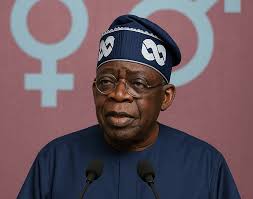
Tinubu urban development policy call urges states to adopt the national framework to strengthen sustainable city planning and infrastructure.
Tinubu urban development policy drive has gained fresh momentum as President Bola Tinubu urged state governments to domesticate the recently approved National Urban Development Policy to strengthen urban planning and governance across Nigeria.
Also read: Tinubu seeks Senate confirmation of new service chiefs
The President, represented by the Minister of Housing and Urban Development, Ahmed Dangiwa, made the call at the 56th International Conference and Annual General Meeting of the Nigerian Institute of Town Planners (NITP) held on Tuesday in Abuja.
Themed “Refocusing Planning Administration Towards Sustainable Urban Governance and Development,” the conference brought together professionals, policymakers, and academics to examine the challenges of unplanned growth and the future of Nigerian cities.

Tinubu said urban development sits at the core of his administration’s Renewed Hope Agenda, noting that cities are not just economic centres but also “spaces of innovation, social integration, and environmental responsibility.”
He said, “Nigeria currently faces rapid urbanisation, informal settlements, and infrastructural gaps. The approval of the National Urban Development Policy reflects our determination to build liveable, resilient, and productive cities.”
The President explained that the policy provides a harmonised framework for collaboration among planning, housing, and infrastructure agencies — ensuring coherence and accountability in urban governance.
“I want state governments to domesticate this policy in their own domains,” he added, emphasising that the Federal Government is partnering with professional bodies like the NITP to promote evidence-based policymaking and capacity building.
Tinubu listed other ongoing initiatives including the digitisation of planning administration, the Urban Inclusiveness Policy, and mainstreaming climate action in city planning. He also noted that bus terminals had recently been inaugurated in Abuja, with one planned for each geopolitical zone as part of national urban regeneration efforts.
In his address, Dr Ogbonna Chime, President of the NITP, said Nigeria’s urban administration remains hampered by weak institutions and poor political commitment. He lamented that many cities still lack master plans, while those available are often manipulated by political interests.
Chime described the situation as “a major factor behind haphazard urban growth, slum proliferation, and environmental decay,” calling for better synergy between professional planners and political leaders.
He urged planners to enforce existing laws, demand proper implementation, and ensure that settlement development is orderly, inclusive, and sustainable. “Nigeria’s urbanisation can either become a curse of slums and congestion or a blessing of prosperity and sustainability,” he said.
Also speaking, Isyaku Kura, President of the Town Planners’ Registration Council of Nigeria (TOPREC), highlighted the need for stronger professional regulation to prevent unqualified individuals from undermining the profession.
Former Minister of State for the FCT, Ramatu Aliyu, emphasised that political will remains crucial to implementing urban policies. She urged professional planners to engage in politics to influence decisions that shape Nigeria’s urban future.
Also read: President Tinubu Warns on Resource Theft Threatening West Africa
With the Tinubu urban development policy now in focus, experts say its success will depend on effective state-level adoption, institutional reforms, and unwavering political commitment to building cities that are both resilient and inclusive.


