


Nigeria’s government assures citizens and foreigners of improved security following UK travel warnings over violence, terrorism, and kidnappings.
The Federal Government has assured Nigerians and foreign nationals that it is intensifying efforts to improve security across the country, following a fresh travel warning issued by the United Kingdom.
Also read: PDP protest urges US to protect Nigeria’s democracy
The UK Foreign, Commonwealth and Development Office (FCDO) advised against all travel to Borno, Yobe, Adamawa, Gombe, Gombe, Katsina, and Zamfara states due to rising terrorism, kidnappings, and violent crime. It also urged British nationals to avoid all but essential travel to Bauchi, Kaduna, Kano, Kebbi, Jigawa, Sokoto, Niger, Kogi, Plateau, Taraba, and parts of the Federal Capital Territory.
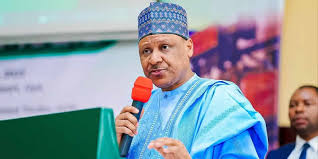
Speaking to The PUNCH on Sunday, Minister of Information and National OrientationMohammed Idris said the government was “keenly aware of security challenges in parts of the country and is making efforts to address them and make every part of the country safe for citizens and foreigners alike.”

Idris highlighted that President Bola Tinubu had restructured top security personnel and increased investment in military hardware and intelligence operations. “Our security challenges will soon be a thing of the past,” he said.
“All foreign nationals in Nigeria are guaranteed their safety as the government implements more effective security measures.”
The Gombe State Government rejected the UK advisory, describing it as “unfounded and unfair.” Director-General, Press Affairs, Government House Gombe, Ismaila Misilli, insisted the state remains peaceful and stable, with strong partnerships with security agencies to protect lives and property.
Similarly, the Kano State Government downplayed the advisory, describing it as routine. Chief Press Secretary Mustapha Muhammad said local authorities were actively addressing security challenges, particularly along borders where banditry is prevalent.
In Borno State, the Special Adviser on Security Matters to Governor Babagana Zulum, General Abdullahi Ishaq (retd.), said security measures had improved significantly.
He emphasised that insurgents are surrendering in large numbers through community engagement and that relative peace is evident in rising agricultural output.
The FCDO also warned of security risks in the South-East, South-South, and South-West regions. Militancy in the Niger Delta, separatist movements in the South-East, and violent crime in major cities, including Lagos, remain points of concern.
Travellers were advised to stay alert, follow local security advice, and ensure contingency plans are in place.
Nigeria’s security landscape continues to be shaped by a decade-long mix of terrorism, banditry, separatist agitation, and communal conflicts. While progress has been made in some regions, Boko Haram remains active in the North-East, armed banditry persists in the North-West, and criminal militancy in the Niger Delta continues.
Recently, former US President Donald Trump described Christianity in Nigeria as facing an “existential threat” from radical Islamist groups, prompting increased global attention on Nigeria’s security situation.
Also read: Rotary Foundation Deepens $5m Commitment to Maternal, Child Health in Nigeria
Minister Idris has emphasised that 17,000 terrorists are currently in custody, signalling the government’s commitment to tackling insecurity nationwide.


