


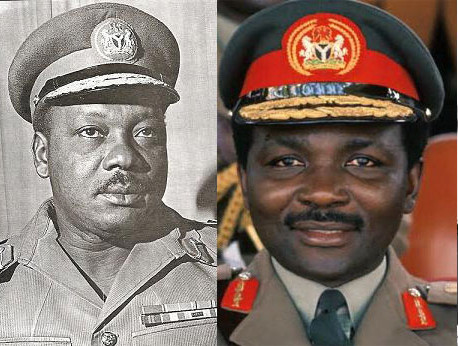
Aguiyi-Ironsi and Gowon July 29 coups reshaped Nigeria. One ended in brutal death, the other in exile—both defining the nation’s military-political history
Aguiyi-Ironsi and Gowon July 29 coups stand as grim milestones in Nigeria’s turbulent political journey.
Also read: Gowon Reignites Biafra War Debate with Controversial Claims
Two military rulers—one murdered, the other quietly removed—fell exactly nine years apart, on the same date.
On July 29, 1966, Major-General Johnson Thomas Umunnakwe Aguiyi-Ironsi, Nigeria’s first military Head of State, was overthrown and killed in a bloody counter-coup.

Sparked by lingering ethnic distrust from the January 15 coup led by mostly Igbo officers, the retaliation came fast and ruthless.
Northern soldiers executed scores of Southern officers, and Aguiyi-Ironsi, alongside Western Region Governor Lt. Col. Adekunle Fajuyi, was captured and assassinated in Ibadan.
The coup not only marked the bloodiest military upheaval in Nigeria’s history but also ignited the fuse that led to the Nigerian Civil War.
Fast forward to July 29, 1975: General Yakubu Gowon, who rose to power after Aguiyi-Ironsi’s death, was peacefully overthrown while attending an OAU summit in Kampala.
Disillusioned by Gowon’s delay in returning Nigeria to civilian rule and a growing perception of corruption in his administration, military officers led by his own cousin, Colonel Joseph Garba, ousted him in a coup without firing a single shot.
The contrast was stark. Aguiyi-Ironsi’s end was savage and chaotic; Gowon’s, calculated and silent. Yet both events triggered powerful shifts in national direction.
These July 29 coups reflect Nigeria’s early post-independence instability, where military might dictated leadership, and ethnic fault lines widened with every power grab.
Despite efforts to unify the nation, deep suspicions and power imbalances pushed Nigeria toward decades of distrust.
The Aguiyi-Ironsi and Gowon July 29 coups were more than regime changes—they were warnings.
Warnings about centralised control, ethno-regional mistrust, and the high cost of military governance.
Also read: We Lost Awolowo, We Lost Abiola, We Must Not Lose Tinubu
Decades later, the date still echoes in Nigeria’s collective memory—not just as history, but as a cautionary tale of how power seized without consensus can fracture a nation.


