


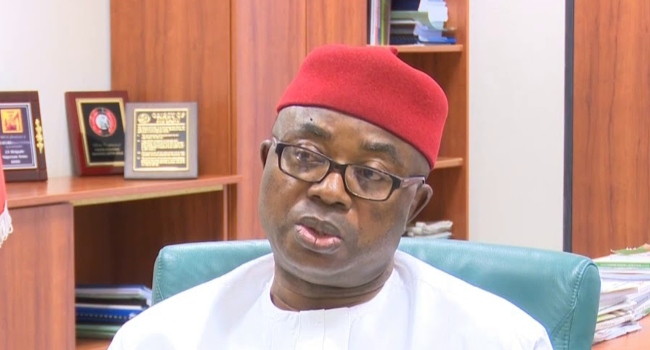
Sam Onuigbo calls for Igbo equity, a sixth Southeastern state, and structural reforms to address historic marginalisation in Nigeria
Senator Sam Onuigbo has commended President Bola Ahmed Tinubu’s reforms and called for greater Igbo equity in Nigeria, urging structural adjustments and the creation of a sixth Southeastern state to address historic marginalisation.
Also read: Equity Dispute Rocks Pan African Towers as Former CEO Takes DPI, Verod to Court
Speaking at the Global Igbo Foundation Initiatives’ keynote session themed “Igbo Yesterday, Today, and Tomorrow,” Onuigbo traced the socio-political and economic history of the Igbo, highlighting their entrepreneurial resilience, cultural contributions, and sustained commitment to national development despite systemic inequities.
Onuigbo referenced the Eastern Region’s pre-civil war economic dynamism and educational investments, noting that the region once allocated nearly 45 per cent of its revenues to education, culminating in the establishment of Nigeria’s first indigenous university at Nsukka in 1960.

He described post-war policies, including the flat £20 compensation for bank account holders and selective reconstruction, as deliberate structural disadvantages that weakened the Igbo’s political and economic leverage.
He also highlighted the Justice Mamman Nasir Boundary Adjustment Commission of 1975, which reduced Igbo-majority territory to five states, restricting federal representation, appointments, and political influence.
“This is a concrete ceiling placed on a people’s political aspiration,” Onuigbo said.
While acknowledging the establishment of the South East Development Commission under President Tinubu as a positive step, Onuigbo emphasised that deeper reforms, including the creation of a sixth Southeastern state, are necessary to guarantee genuine equity and national unity.
He stressed that the Igbo future in Nigeria must be negotiated, not begged for.
Onuigbo further expressed confidence in President Tinubu’s re-election prospects in 2027, citing economic indicators such as declining food prices, reduced inflation, unified foreign exchange windows, and stable fuel supply over the festive season.
He outlined a blueprint for the region’s future, including formalising the apprenticeship system, promoting technology-driven industrial growth, and reviving Igbo language and culture while building pan-Nigerian coalitions.
“The Igbo destiny is inextricably linked to Nigeria’s. We survived, thrived against engineered odds, and contributed relentlessly to national development,” Onuigbo said.
Also read: Naija Times Celebrates Milestone, Establishes Journalism Foundation for Democracy, Equity
“Now, the contract must be renewed on fair terms. True structural reform and equitable federalism are not an Igbo agenda they are a Nigerian imperative.”


