


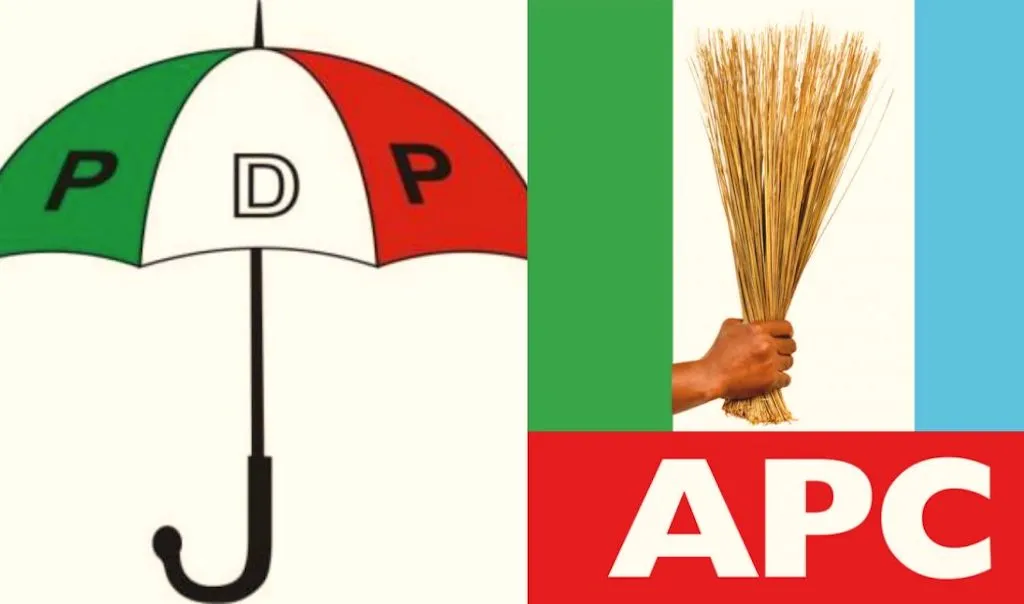
Canada Court PDP, APC terrorist ruling draws sharp criticism from Nigerian political parties, who call the judgment biased and damaging to democracy
Canada Court PDP, APC terrorist ruling has drawn strong condemnation from Nigeria’s two major political parties — the People’s Democratic Party (PDP) and the All Progressives Congress (APC) — after a Federal Court in Canada upheld the classification of both parties as organisations linked to terrorism and democratic subversion.
Also read: PDP Zoning Committee Inauguration Signals Strategic Shift
The controversial ruling, delivered on June 17, 2025, by Justice Phuong Ngo, supported the denial of asylum to Nigerian national Douglas Egharevba, citing his past membership in both parties.
Egharevba was affiliated with the PDP from 1999 to 2007 and later with the APC until his move to Canada in 2017.
The Canadian Immigration Appeal Division (IAD) found that political violence, electoral manipulation, and systemic abuse tied to both parties met the threshold for democratic subversion under Canada’s Immigration and Refugee Protection Act (IRPA).

“Mere membership of an organisation linked to terrorism or democratic subversion can render a person inadmissible,” Justice Ngo ruled.
In response, the PDP labelled the judgment “misinformed, biased, and lacking evidence.”
Deputy National Youth Leader Timothy Osadolor said:
“There’s nothing on record to justify calling even the malfunctioning APC a terrorist organisation, let alone the PDP, which is a credible democratic institution.”
Osadolor emphasized that democratic nations must exercise caution in their rhetoric, especially when dealing with fellow democracies.
He warned that such generalizations risk eroding legitimate opposition and stoking diplomatic tensions.
Olufemi Soneye, former NNPC spokesperson, described the ruling as a dangerous precedent.
“It opens the door for increased visa denials and asylum rejections, not just in Canada, but across other Western democracies.”
Soneye warned the classification could be misused to suppress political dissent and damage Nigeria’s international credibility.
“Once such a label is applied, it undermines legitimacy — at home and abroad.”
The APC was equally forceful in its rejection. National Secretary Senator Ajibola Bashiru called the judgment a legal overreach:
“The court has no jurisdiction to determine the status of Nigerian political parties, let alone label them terrorist organisations.”
He dismissed the ruling as a product of “a racist and narrow asylum process,” suggesting it was driven more by immigration politics than legal merit.
“We are a legitimate political organization that does not need validation from a foreign bench,” Bashiru stated.
Both the APC and PDP called on Canadian authorities to distinguish individual actions from institutional identities, urging them to avoid sweeping judgments that could strain diplomatic relations or distort Nigeria’s democratic landscape.
Also read: Osun APC Denies Tinubu Withholding LG Allocations
As global scrutiny over political affiliations grows in asylum claims, this case has already sparked broader conversations around immigration law, sovereignty, and political accountability.


