


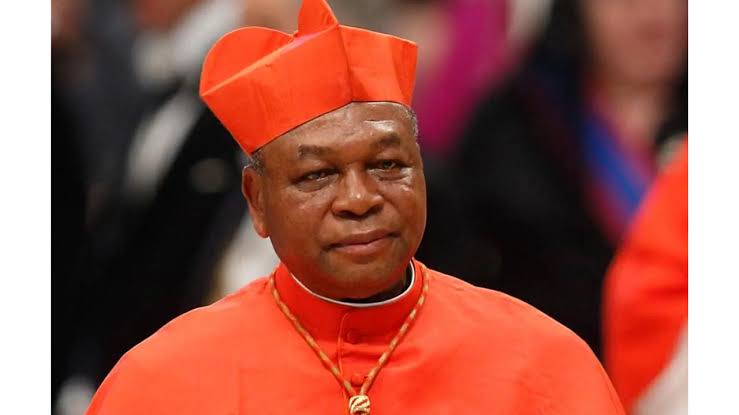
Cardinal John Onaiyekan calls for sweeping electoral reforms, stronger INEC independence and greater media responsibility ahead of Nigeria’s 2027 elections
Cardinal John Onaiyekan, Archbishop Emeritus of Abuja, has called for sweeping electoral reforms in Nigeria, urging the country to strengthen the independence of the Independent National Electoral Commission, accelerate election petitions and give ordinary voters greater legal avenues to challenge disputed results.
Also read: APC Accuses Atiku of Threatening Nigeria Ahead of 2027
Onaiyekan made the call while delivering the keynote address at the 2026 All Nigeria Editors Conference organised by the Nigerian Guild of Editors.
The conference was held under the theme, “The Ballot, the Media and the Task of Keeping Democracy Alive.”
Speaking as an 82-year-old Nigerian and religious leader who has witnessed several phases of the country’s political development, Onaiyekan said Nigeria’s democratic system remained imperfect but should not be abandoned.

He argued that democracy must ultimately serve the common good, with government centred on the interests and welfare of citizens rather than the ambitions of political office holders.
According to the cardinal, elections remain central to democracy because they provide citizens with the opportunity to choose their leaders and assess their performance.
He, however, expressed concern about the conduct of Nigerian elections since the return to democratic rule in 1999, arguing that the quality of elections appeared to have deteriorated rather than improved.
Onaiyekan criticised what he described as the “do-or-die” approach adopted by some politicians who regard elections as battles for power, wealth and influence.
He said such an approach reduces citizens to political pawns and shifts attention away from the primary purpose of elections, which is to reflect the will of the people.
A major part of his address focused on the independence of INEC.
Onaiyekan questioned whether an electoral commission established and substantially dependent on government structures could operate with complete independence when the government in power is itself a contestant in elections.
He therefore called for a review of the process used to appoint the INEC chairman and commissioners.
He argued that electoral officials should not depend primarily on the President or state governors, particularly because both levels of government can have direct political interests in elections.
The cardinal also proposed the creation of a special election tribunal dedicated exclusively to electoral disputes.
Such a tribunal, he said, should be required to resolve election cases within a clearly defined period, preferably before elected officials are sworn into office.
Onaiyekan expressed concern about situations in which candidates who have already been declared winners assume office while simultaneously defending their victories in prolonged court proceedings.
He argued that resolving disputes before inauguration would strengthen public confidence in the electoral process and reduce the advantages that state power could provide to candidates defending disputed victories.
Another major proposal was to give individual voters the right to challenge election results.
Under the current system, he noted, the legal ability to challenge an election is generally tied to candidates and other legally recognised parties.
Onaiyekan argued that citizens whose votes are directly affected by disputed results should also have an avenue to present their concerns before election tribunals.
He further advocated the introduction of independent candidates, particularly at local government level.
According to him, allowing respected community members to contest without joining political parties could reduce what he described as the influence of political godfathers and the dominance of party structures.
The cardinal also proposed a major change to the presidential electoral system.
He called for a requirement that a presidential candidate obtain at least 50 per cent of votes cast before being declared the winner.
Where no candidate reaches the threshold, he proposed a second-round contest between the two leading candidates.
Onaiyekan also called for tighter rules on lawmakers who cross from one political party to another after winning elections.
He suggested that legislators who change parties should return to their constituencies for fresh elections under their new political platforms.
He argued that such a system would ensure that elected representatives remain accountable to the voters who originally elected them.
Despite his criticism of the existing framework, Onaiyekan said Nigeria could still conduct credible elections under the current laws if political actors and institutions followed the rules sincerely.
He acknowledged that major legal changes might not be possible before the 2027 elections but urged the next National Assembly to make electoral reform a priority.
The cardinal also addressed the role of the media, describing journalism as an essential pillar of democratic governance.
He urged Nigerian media organisations to report government policies and actions fairly, while remaining prepared to scrutinise decisions that require criticism or review.
Onaiyekan said the media should maintain professional independence even when its operations depend on government, corporate or private funding.
“A free press is necessary for a genuine democracy,” he said, while acknowledging the challenges facing journalists in maintaining that independence.
He pointed to Nigeria’s large number of newspapers, radio and television stations and the rapid growth of social media as evidence of the country’s diverse media environment.
He also highlighted the growing influence of artificial intelligence, warning that the technology presents both opportunities and risks for journalism and public communication.
For Onaiyekan, the media’s responsibility extends beyond reporting political events.
Journalists must help citizens understand how government works, scrutinise those in authority and provide reliable information on which voters can make informed decisions.
He also called on religious leaders to contribute more actively to the promotion of ethical governance.
Rather than seeking political patronage, he urged Christian and Muslim leaders to emphasise honesty, accountability, respect for the law and commitment to the common good in their teachings.
The cardinal concluded by arguing that Nigerians should continue working towards a political system in which leaders are freely chosen and government genuinely serves the people.
He acknowledged that democracy is difficult to perfect but rejected the idea that Nigeria should simply accept weaknesses in its democratic system because other countries took centuries to develop theirs.
For Onaiyekan, the challenge is not merely to hold elections, but to ensure that the ballot accurately reflects the choice of citizens and that institutions protect that choice.
Also read: APC Accuses Atiku of Threatening Nigeria Ahead of 2027
His address places electoral reform, media independence and ethical leadership at the centre of the wider debate over how Nigeria can strengthen its democracy ahead of the 2027 elections.


