


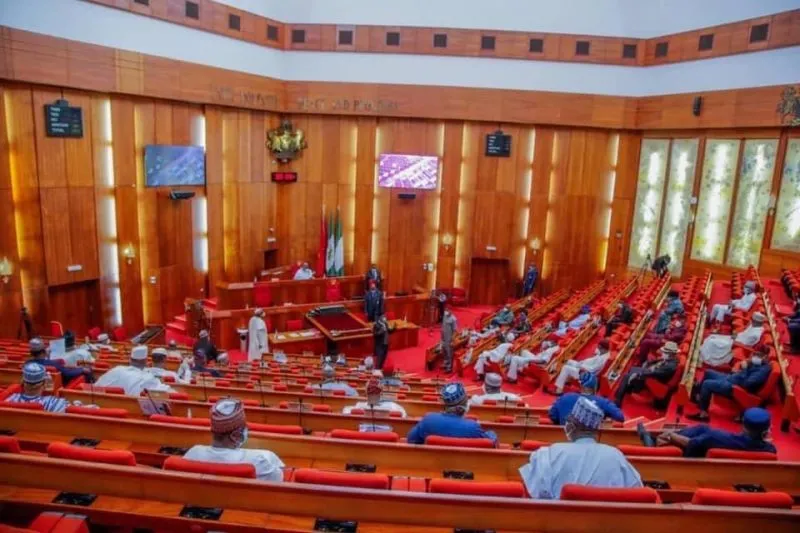
Senate electronic transmission approved with conditions, marking partial reform while manual collation remains fallback
The Nigerian Senate has amended the Electoral Act to permit electronic transmission of results from polling units to the Independent National Electoral Commission’s Result Viewing Portal, but only under strict conditions, Senate Chief Whip Tahir Monguno (APC, Borno North) confirmed on Tuesday.
Also read: Kenneth Okonkwo Criticises Senate Over Weak Electoral Act Amendment
The reform, which followed sustained civic pressure and public outrage, allows electronic results to be transmitted after vote counting.
However, lawmakers inserted a decisive caveat: in the event of internet or network failure, the physical result sheet Form EC8A remains the primary basis for collation.

Observers note that the amendment represents a cautious, politically calculated compromise rather than a full embrace of electoral transparency.
Critics argue that making electronic transmission optional preserves the discretion that reformers sought to curtail, leaving room for disputes during collation.
The emergency plenary session that passed the amendment reflected growing pressure from civil society, media bodies, and pro-democracy organisations concerned that previous rejection of electronic transmission could facilitate result manipulation.
While the law now formally recognises the technology, its optional application raises questions about implementation and accountability.
Political analysts say the amendment functions as a pressure valve, easing public anger without fundamentally altering the dynamics of Nigeria’s electoral process.
Legal experts warn that the “network failure” clause may become a central issue in post-election petitions, potentially prolonging disputes.
Despite these concerns, the partial reform is a milestone: electronic transmission is now explicitly sanctioned in law for the first time.
Advocates stress that its long-term impact will depend on INEC’s consistent application, transparent communication, and resistance to political interference.
The Senate’s decision illustrates a delicate balancing act between technological progress, infrastructural realities, and entrenched political interests.
Also read: Labour Party HQ Vandalised Amid Nenadi Usman-Abure Faction Clash
While the reform advances Nigeria’s electoral framework, it remains a measured step, with comprehensive transparency still dependent on future legal and institutional action.


