


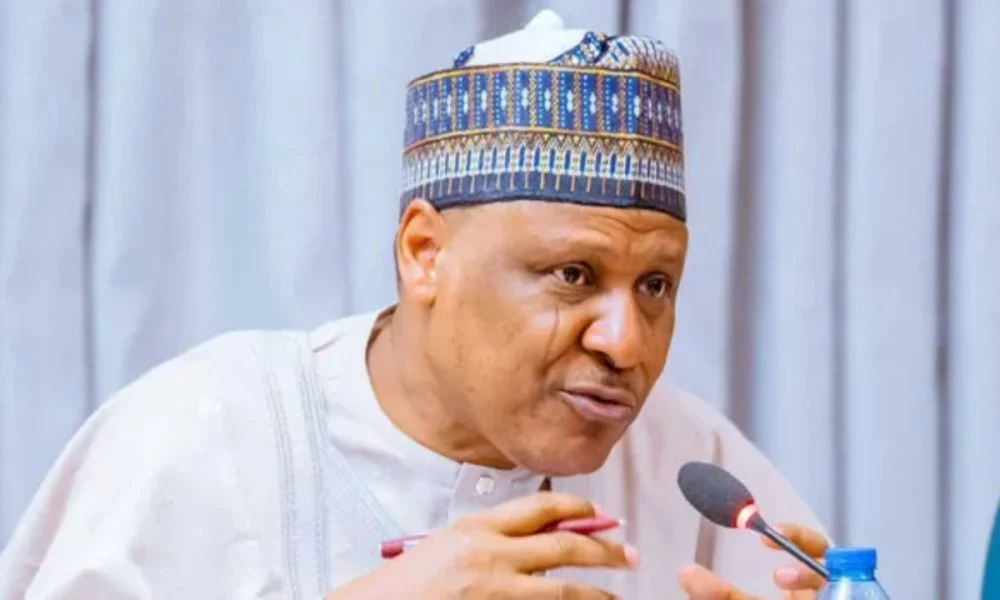
Information and National Orientation Minister Mohammed Idris has defended President Bola Tinubu’s economic reforms, saying Nigeria’s economy is now on a stronger footing and entering a new phase focused on investment, job creation and shared prosperity.
Idris made the remarks on Thursday, October 8, 2026, during a press briefing in Abuja on fuel prices, the removal of petrol subsidy and the government’s economic direction.
According to the minister, the reforms introduced by the Tinubu administration were necessary to address longstanding structural and fiscal challenges, strengthen public finances and redirect resources towards national development priorities.
He said the country was moving beyond the initial phase of economic adjustment towards a period in which the benefits of the reforms should become more visible in the daily lives of Nigerians.

Idris described the government’s next phase as “From Reform to Prosperity”, with emphasis on expanding employment opportunities, supporting businesses, increasing incomes and improving living conditions.
He maintained that the removal of petrol subsidy had formed part of efforts to address distortions in public spending and create room for more sustainable economic management.
However, the minister’s defence came amid continuing concerns over the impact of high petrol prices and other living costs on households and businesses.
Speaking at the same briefing, the Minister of Finance and Coordinating Minister of the Economy, Taiwo Oyedele, acknowledged the pressure fuel prices were placing on Nigerians. He said the government was pursuing measures intended to ease the burden without returning to a broad petrol subsidy system.
The measures outlined included support for domestic refining, tax and duty waivers on petroleum products, the adoption of compressed natural gas, targeted assistance for vulnerable households and businesses, and steps to reduce volatility in fuel prices.
The government’s position is that the reforms are intended to establish a more stable economic environment capable of supporting investment and long-term growth. Their wider impact, however, will also be judged by whether improved economic indicators translate into more jobs, stronger purchasing power and affordable living costs for citizens.
Recent figures provide some support for the government’s argument that economic activity has strengthened. The World Bank reported on October 8 that Nigeria’s economy grew by 4.2 per cent in the first half of 2026, compared with 3.9 per cent in the corresponding period of 2025. It attributed much of the growth to the services sector, alongside a stronger contribution from agriculture.
The World Bank also said the recovery in growth, public finances and Nigeria’s external position had improved economic performance, while stressing that sustaining reform efforts would be important to ensuring that the benefits were more widely shared.
The Federal Government has similarly cited stronger foreign reserves, increased domestic refining capacity and improved investment and productive activity as signs of progress.
Idris said the administration’s priority was now to ensure that the gains from economic reforms created practical opportunities for Nigerians rather than remaining limited to economic indicators.
The government has continued to defend the removal of petrol subsidy and other fiscal changes as necessary steps towards long-term stability. Critics, however, have raised concerns about the immediate cost of the measures and the pace at which their benefits are reaching ordinary citizens.


