


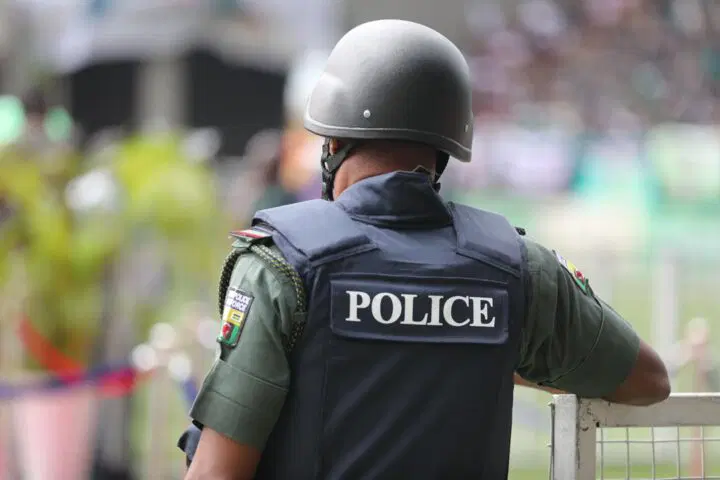
Plateau 2027 election security takes centre stage as police, DSS and INEC pledge cooperation against violence, vote-buying and political misinformation
Plateau State Commissioner of Police, CP Faniyan Ayodeji, has assured political parties and candidates that security agencies will work to prevent election-related violence ahead of Nigeria’s 2027 general elections, during a stakeholders’ meeting at the Police Officers’ Mess in Jos, Plateau State, on Thursday, 22 October 2026. Representatives of the Department of State Services (DSS), the Independent National Electoral Commission (INEC), the Nigerian Army, the National Orientation Agency (NOA) and the Inter-Party Advisory Council (IPAC) attended the meeting to discuss preparations for peaceful and credible polls.
Also read: APC Secretary Questions Atiku’s Economic Expertise
The commissioner acknowledged concerns about the state’s vulnerability to electoral violence but said security agencies were taking proactive steps to identify threats, strengthen intelligence gathering and prepare for possible disturbances during the campaign period and on election day.
“Our duty as security agencies is to disappoint those who are expecting or predicting violence,” CP Ayodeji said.
He disclosed that the Inspector-General of Police had been briefed on the security situation in Plateau and had approved additional personnel and logistical support to address emerging challenges.

The state command, he added, was working with other security agencies to identify areas with a history of electoral violence and assess risks associated with political activities.
The commissioner also pledged protection for political parties and their candidates, stressing that security arrangements would be designed to support lawful campaigning and safeguard voters.
“We are willing and ready to collaborate with all political parties and aspirants. We will make adequate security plans and provide adequate security protection for all,” he said.
CP Ayodeji identified vote-buying, political thuggery, hate speech, incitement, internal party disputes and conflicts between rival parties as potential threats.
He also highlighted the growing risks associated with artificial intelligence and social media, particularly the use of misleading content to inflame tensions or damage political opponents.
The police chief urged politicians to conduct their campaigns responsibly and comply with the Electoral Act, warning against language and actions that could provoke violence.
“Election is not a do-or-die affair. Election should not ignite violence. Election should not divide us,” he said, adding that political parties should present their policies to voters and allow the electorate to determine the outcome.
He further reiterated that the police would remain neutral throughout the electoral process.
The command, he said, had sufficient manpower to cover polling units across the state, while patrol vehicles would support rapid responses to incidents.
Intelligence operations would also target individuals suspected of exploiting political tensions to create disturbances.
State Director of the DSS, Paul Damian, similarly pledged cooperation with other security agencies, emphasising that the conduct of political actors and electoral officials would play an important role in determining the level of security required.
“We will work in synergy with other sister agencies to provide adequate security during the election,” Damian said.
He argued that responsible conduct by political parties and INEC could reduce the need for extensive security deployment at every location.
Damian also pledged to maintain neutrality and ensure that officers under his supervision performed their duties appropriately.
The message placed responsibility for peaceful elections on more than security personnel alone.
While police and intelligence agencies are expected to prevent and respond to threats, political leaders, candidates, election officials and voters will also influence whether tensions escalate into violence.
National Orientation Agency State Director Kaneng Tabitha Pam-Hworo urged political parties to encourage their supporters to obtain their Permanent Voter Cards and reject vote-buying.
She warned that voters should not allow financial inducements or political pressure to undermine their participation in the electoral process.
Pam-Hworo also reminded candidates that only one person could win the Plateau governorship election, urging contestants and their supporters to accept the outcome peacefully.
“In every election, there is a winner and there is a loser. For the governorship of this state, only one seat is available. Only one person will win,” she said.
She called on party leaders, particularly those involved in IPAC, to restrain supporters from engaging in violence at polling units.
Such incidents, she warned, could jeopardise the electoral process and lead to the cancellation of affected results where required by electoral rules.
The NOA director also raised concerns about fake news, misrepresentation and character assassination, urging political actors to avoid spreading inflammatory claims for electoral advantage.
“We are currently enjoying some peace in the state, and we must sustain it,” she said.
For INEC, the meeting provided an opportunity to outline preparations for an election that accommodates voters across different circumstances, including people displaced by insecurity.
Resident Electoral Commissioner Professor Sam Egwu, represented by the Head of Electoral Operations, said the commission was preparing to deliver a peaceful, free and transparent election.
He described the meeting as part of an ongoing process of consultation and feedback among electoral stakeholders.
The INEC representative said preparations at the state level were nearing completion and that measures were being developed to improve access for persons living with disabilities and internally displaced persons (IDPs).
He identified Wase, Mangu, Barkin Ladi, Bokkos and Bassa among the local government areas where the commission had identified challenges involving displaced populations.
The commission was also seeking information about displaced people in other locations to help ensure that eligible voters were not excluded.
According to the representative, INEC was working with organisations at the national level to address the practical challenges of enabling displaced voters to participate.
The success of those efforts will depend on the accessibility of voting arrangements, reliable information about displaced communities and effective coordination between electoral officials and relevant partners.
The emphasis on displaced voters is particularly significant in Plateau, where insecurity and communal tensions have repeatedly affected communities.
A 2018 assessment by the United States Institute of Peace documented the state’s history of communal conflict and previous episodes of election-related violence.
Although the report distinguished the risks associated with local elections from those surrounding national polls, the history underlines why preventive planning and public confidence remain important.
The forthcoming elections will therefore require security preparations that extend beyond the deployment of personnel.
Intelligence gathering, credible electoral administration, responsible political communication and accessible voting arrangements will all be essential to reducing the risk of disruption.
INEC’s revised electoral timetable places the presidential and National Assembly elections on 16 January 2027 and the governorship and State House of Assembly elections on 6 February 2027.
With the Plateau governorship contest approaching, the stakeholders’ meeting represents an early effort to address security concerns before the final stages of campaigning.
The assurances given in Jos offer a positive signal, but their effectiveness will ultimately be measured by events on the ground.
Preventing violence will require security agencies to act impartially, political parties to control their supporters, and electoral authorities to maintain public confidence in the process.
For Plateau residents, the central concern is whether these commitments will translate into a safe environment in which eligible voters can participate freely and candidates can compete without intimidation.
Also read: APC Secretary Questions Atiku’s Economic Expertise
The meeting has established a shared message among key institutions: electoral competition must not become a justification for violence, and peaceful participation must remain the priority.


