


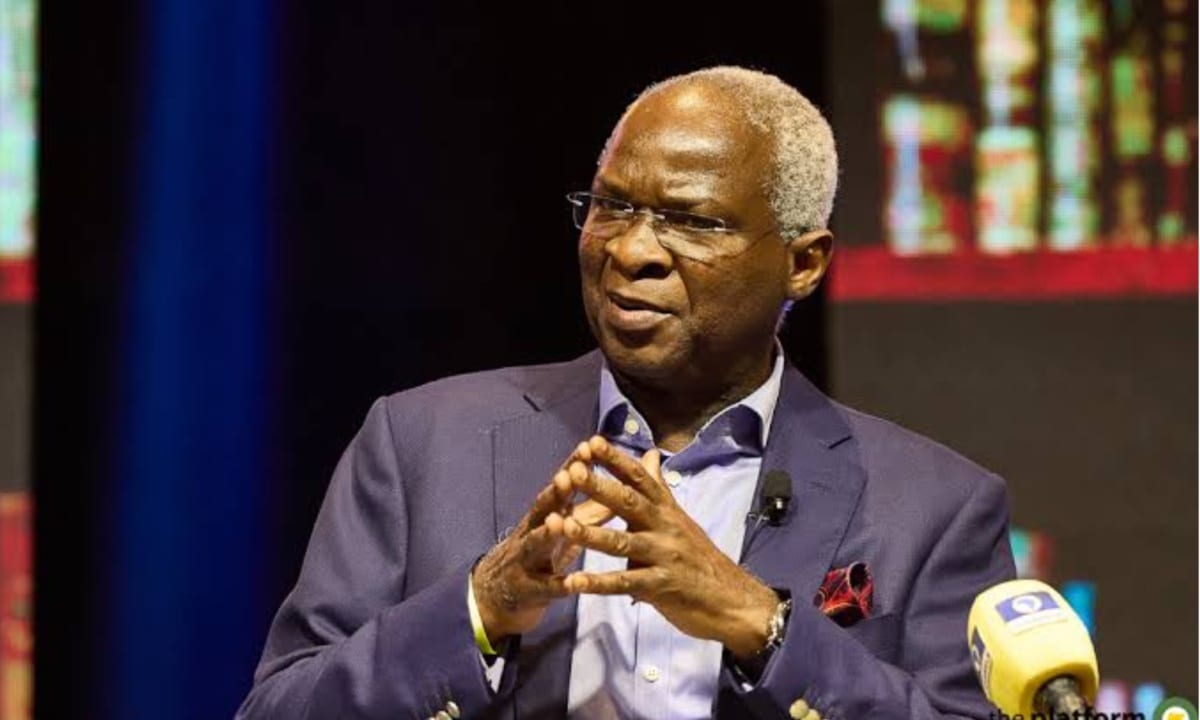
Babatunde Fashola says Funsho Williams’ murder exposed the dangers of politics but did not deter him from pursuing public service
Former Lagos State Governor Babatunde Fashola has said the 2006 murder of governorship aspirant Funsho Williams made him realise the dangers of political participation, but did not discourage him from pursuing public service.
Also read: Fashola Rejects Death Penalty for Election Rigging
Fashola said he considered serving Nigeria worth the personal risks, including the possibility of losing his life, as he reflected on Williams’ killing during an interview with ARISE News anchor Ojy Okpe.
The former governor explained that the murder, which occurred at Williams’ residence in Ikoyi, Lagos, exposed the dangers associated with seeking political office.
“It showed me that, for me, it was like, look, listen, if you’re doing this election thing, this is it. These are the odds. You can lose your life in the process,” he said.

However, Fashola said the incident did not change his determination to serve the country.
“As I told friends of mine, for me, speaking for myself at the time, it was worth dying for, to serve the country,” he added.
He said the experience strengthened his resolve to address political violence and promote law and order if elected governor.
“My resolve was to then, from there, enthrone law and order, remove violence from our country,” Fashola said.
Reflecting on his administration’s security policies, the former governor highlighted measures that included using the Lagos State Ministry of Justice to prosecute offenders, reforming the police Rapid Response Squad and supporting the establishment of the Lagos State Security Trust Fund.
He said his administration also provided equipment and other resources to law enforcement agencies, alongside life insurance protection for security personnel exposed to dangerous assignments.
Fashola also discussed the failure to secure a conviction over Williams’ murder, saying the case demonstrated the importance of proper criminal investigation and evidence gathering.
“The justice system involves a process of investigation,” he said.
He called for stronger forensic capacity in Nigeria, particularly the use of DNA evidence, fingerprints, blood samples and other biological materials to identify suspects and establish links between individuals and crimes.
The former governor expressed concern over the destruction of a DNA facility during a protest, arguing that attacks on forensic infrastructure weakened the ability of law enforcement agencies to investigate crimes and secure justice.
He also stressed the need for skilled investigators capable of revisiting unresolved cases and following available evidence, even years after offences have been committed.
Williams, a former Peoples Democratic Party governorship candidate in Lagos State, was murdered at his residence in Dolphin Estate, Ikoyi, on July 27, 2006, while preparing for the 2007 governorship election.
He was 58.
Six people were arrested and prosecuted over the killing.
However, a Lagos State High Court sitting in Igbosere discharged and acquitted all six defendants on June 30, 2014, after ruling that the prosecution had failed to establish a prima facie case against them.
The murder remains unresolved, with renewed calls for the investigation to be reopened.
In July 2020, former PDP Deputy National Chairman Bode George urged then President Muhammadu Buhari to order a fresh investigation, saying those responsible for Williams’ killing had yet to be brought to justice.
Also read: Fashola Rejects Death Penalty for Election Rigging
Fashola’s latest comments have again drawn attention to the case and the challenges of investigating serious crimes, particularly when evidence gathering and forensic capacity are limited.


