


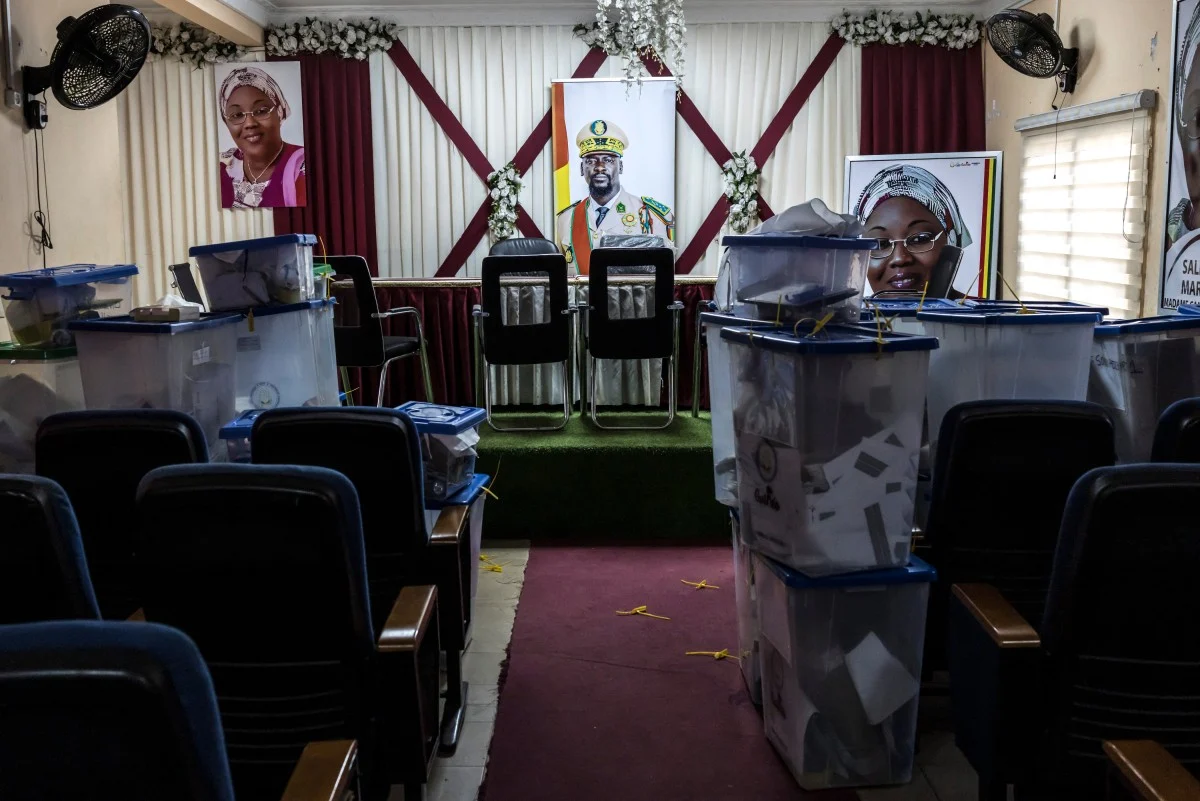
Guinea’s junta leader Mamady Doumbouya leads presidential vote amid opposition boycott and allegations of irregularities and electoral manipulation
Conakry, Guinea Guinea’s junta leader, Colonel Mamady Doumbouya, 41, has taken a commanding lead in the country’s presidential election held over the weekend, according to preliminary results released late Monday.
Also read: Guinea-Bissau Election Marred by Dual Victory Claims
Doumbouya, who seized power in a 2021 coup and had pledged not to run for office, faced eight rivals, though main opposition figures were barred and called for a boycott.
Partial results read on RTG public television by Djenabou Toure, head of the General Directorate of Elections, showed Doumbouya winning more than 80 percent in several districts of the capital, Conakry.

He also led in Coyah, Boffa, Fria, Gaoual, Koundara, Labe, and Nzerekore.
Official figures indicated an 85 percent voter turnout, though opposition groups have questioned this, alleging widespread boycotts.
“A huge majority of Guineans chose to boycott the electoral charade,” the National Front for the Defence of the Constitution said in a statement Monday.
Opposition candidates Abdoulaye Yero Balde and Faya Millimono raised concerns over electoral irregularities, citing restricted access for their representatives and “ballot stuffing” in some areas.
The election follows a controversial constitutional referendum in September 2023 that allowed junta members to stand for office and extended presidential terms from five to seven years, renewable once.
The new rules barred prominent opposition figures, including former Prime Minister Cellou Dalein Diallo, from contesting.
Doumbouya overthrew Guinea’s first freely elected president, Alpha Conde, in September 2021. Since then, his administration has restricted civil liberties, banned protests, and pursued opposition figures, many of whom have been arrested, tried, or forced into exile.
Also read: Jonathan Describes Guinea-Bissau Election as Ceremonial Coup
The results underscore Doumbouya’s dominance but also raise questions about the credibility of the vote and Guinea’s path back to civilian governance.


