


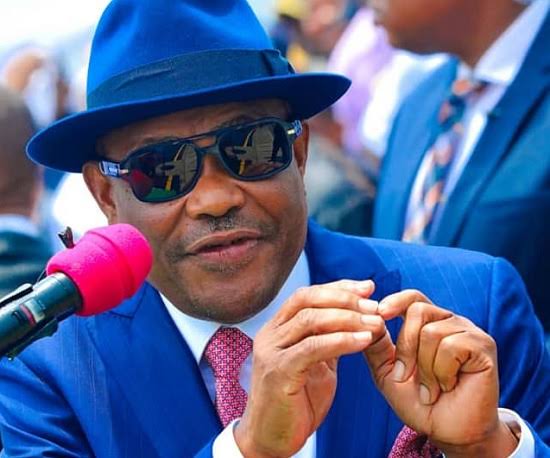
Wike defends Abuja billboard fees amid opposition concerns, saying politics is expensive and advertising revenue will support FCT infrastructure
Nyesom Wike, Minister of the Federal Capital Territory (FCT), has defended high billboard advertising charges in Abuja, saying political campaigns are expensive and the fees are intended to generate revenue for infrastructure development.
Also read:Melaye Says Atiku Won’t Control N’Assembly Leadership
Wike spoke during his monthly media chat in Port Harcourt, Rivers State, on Thursday, November 5, 2026, following concerns from opposition parties that the rising cost of billboard spaces in the capital could restrict their ability to reach voters ahead of the 2027 general elections.
“Politics is expensive all over the world,” Wike said, arguing that political parties could also use social media to communicate with supporters and promote their candidates.
The minister maintained that the charges were not designed to disadvantage opposition parties, but formed part of the FCT Administration’s efforts to increase internally generated revenue.

“We want money. The FCT wants money, and part of us making money is through the billboards to raise our revenue,” he said.
Wike added that revenue from billboard advertising would be channelled towards public infrastructure, including roads and schools.
“I am going to use the money to do more roads, to improve the schools,” he said.
The minister also questioned the influence of billboard advertising on election outcomes, suggesting that parties should not rely on the medium alone to secure votes.
“For Christ’s sake, a billboard does not win an election; how many people in the villages know about the billboard?” he said.
Wike said the FCT Administration was not responsible for determining which political parties or campaign organisations secured billboard spaces, arguing that advertising businesses operated on commercial terms.
He also noted that political parties paid for premium advertising slots in media organisations, drawing a comparison with the costs associated with campaign visibility across different platforms.
“People go and pay a year ahead for billboards, ‘how will I know?’ My business is not going to ask, who and who paid for the billboard,” he said.
The minister challenged opposition parties alleging discrimination to submit formal complaints to the FCT Administration, insisting that no party had raised the matter directly with him.
“Let them complain to us; no one has complained to us. Nobody has complained to me,” Wike said.
The dispute comes amid wider concerns about the cost of political advertising ahead of the 2027 elections.
A report by BusinessDay on October 27 noted that billboard fees in several states had become a financial hurdle for opposition candidates, with some charges running into hundreds of millions of naira.
The high fees have raised questions about whether smaller parties and candidates with limited resources can compete for public visibility on equal terms, particularly in prominent urban locations.
However, claims about specific FCT campaign billboard charges have also been contested. In August, Wike’s media aide, Lere Olayinka, denied reports that the minister had approved a ₦750 million permit fee for presidential campaign billboards in Abuja, describing the claim as false.
The broader debate centres on the balance between the authorities’ power to regulate outdoor advertising and generate revenue, and political parties’ ability to communicate with voters without prohibitive costs.
Analysts and opposition figures have warned that steep fees could narrow the space for electoral competition, while governments have cited regulation, orderliness and revenue generation as reasons for the charges.
Wike, a former governor of Rivers State, remains a prominent political figure ahead of the 2027 elections and has publicly declared support for President Bola Tinubu’s re-election bid.
Also read:Melaye Says Atiku Won’t Control N’Assembly Leadership
With campaign activity intensifying, billboard advertising costs are likely to remain part of the debate over access, fairness and the financial demands of electioneering.


