


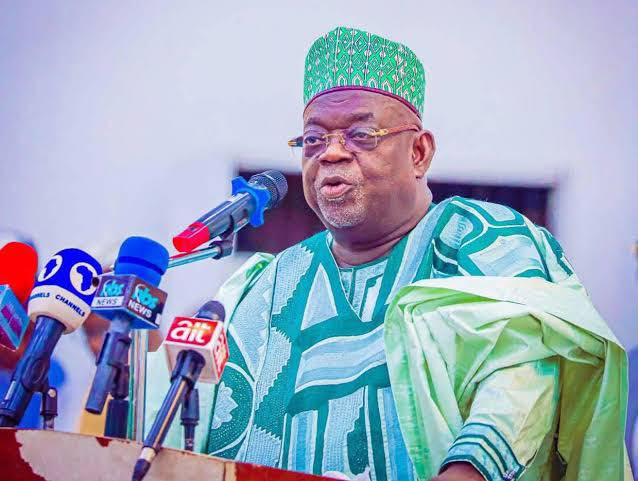
Mu’azu Babangida Aliyu unity call highlights Zik’s political sacrifices and urges renewed commitment to Nigeria’s cohesion.
Mu’azu Babangida Aliyu unity call dominated discussions at the sixth Annual Dr Nnamdi Azikiwe Award Lecture 2025 in Abuja, where the former Niger State Governor praised Dr Nnamdi Azikiwe’s political compromises as essential acts that kept Nigeria from falling apart in its fragile early years.
Also read: Top North-Central Politician: Muazu Babangida Aliyu
Aliyu said Zik’s decisions were guided by realism, national survival and a deep commitment to unity, values he urged today’s leaders and citizens to embrace.
Aliyu noted that the political tensions before and after independence threatened to fracture the young federation. He argued that Zik’s alliances, including his cooperation with the NPC before the 1966 coup and his party’s partnership with the NPN in the Second Republic, were deliberate attempts to prevent division.

He described love for one’s country as a principle rooted in faith and moral duty, adding that Nigerians must accept where destiny has placed them and work to strengthen the nation.
The keynote speaker, Prof Mainasara Umar-Kogo, delivered a powerful charge, stressing that Africa’s stalled progress stemmed from corruption, disunity and failed leadership.
He said the continent had abandoned the ideals of Zik, Nkrumah and Mandela, warning that Nigeria could not inspire Africa while battling internal injustice, lawlessness and ethnic strife. He argued that unity must be founded on justice and integrity, not empty rhetoric.
The Director-General of the award, Chief Chineme Onyeke, said nations must not only honour their heroes but also sustain their dreams.
He announced plans for a Zik Centre for Leadership and African Studies and appealed to the Federal Government to support the project. He reminded attendees that history honours values and institutions, not mere titles.
Prof Uche Azikiwe, the widow of the former president, commended the organisers and urged stronger documentation of Nigeria’s past.
She said many young Nigerians lacked an understanding of the country’s history, stressing that better knowledge of the nation’s foundations might have altered its developmental path.
Azikiwe’s legacy as a nationalist, journalist and political pioneer remains central to Nigeria’s story. Born in 1904 in Zungeru, he became premier of the Eastern Region, Senate President, Governor-General and later Nigeria’s first President.
Also read: Top North-West Politician: Uba Babangida Hussaini
His life’s work, symbolised today on the ₦500 note, continues to inspire conversations about unity, service and national purpose.


