


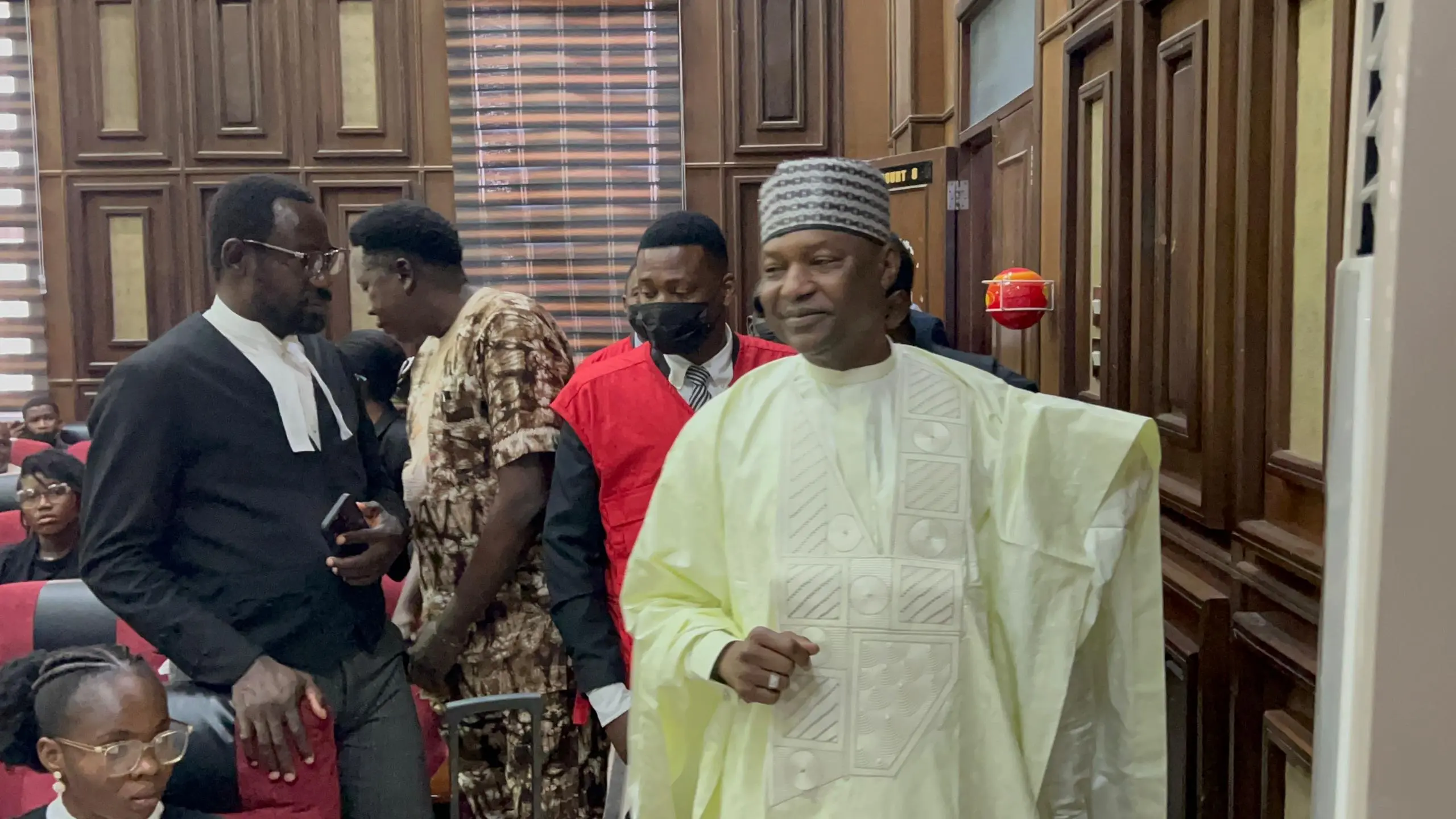
Former AGF Abubakar Malami, his wife and son granted ₦500m bail each in N8.7bn money laundering case by Abuja Federal High Court
Former Attorney General of the Federation and Minister of Justice, Abubakar Malami, alongside his wife, Asabe Bashir, and son, Abdulaziz Malami, has been granted bail by Justice Emeka Nwite of the Federal High Court in Abuja.
Also read: Atiku Rejects Calls to Step Aside for Peter Obi in ADC
Each defendant must pay ₦500 million and meet strict conditions in connection with a 16-count money laundering case involving approximately N8.7 billion filed by the Economic and Financial Crimes Commission (EFCC).
The bail conditions include submission of travel documents, verification of landed property owned by sureties in Asokoro, Maitama, or Gwarinpa, and provision of two recent passport photographs each.

The defendants and their sureties are required to depose to affidavits of means, the court ruled.
Malami, who served as AGF during former President Muhammadu Buhari’s administration from 2015 to 2023, has spent nearly a month in EFCC custody and at the Kuje Correctional Centre, while his wife and son have spent 16 days in detention. Their detention followed arraignment on December 30, 2025.
The EFCC accused the family of retaining proceeds of unlawful activity and acquiring assets through funds of suspicious origin, charges they have denied.
At the initial hearing, defence counsel, Joseph Daudu, Senior Advocate of Nigeria, argued that the offences were bailable, while the prosecution, represented by Ekele Iheanacho, SAN, cited the gravity of the allegations and risk of witness interference.
Justice Nwite initially denied an oral bail application, citing the need for the prosecution’s right to fair hearing.
The formal bail hearing was conducted on January 2, with the ruling delivered today, prompting their release once all conditions are met.
Also read: Atiku Rejects Calls to Step Aside for Peter Obi in ADC
The trial is ongoing, with the court scheduling proceedings to determine the merits of the EFCC’s 16-count charge.


