


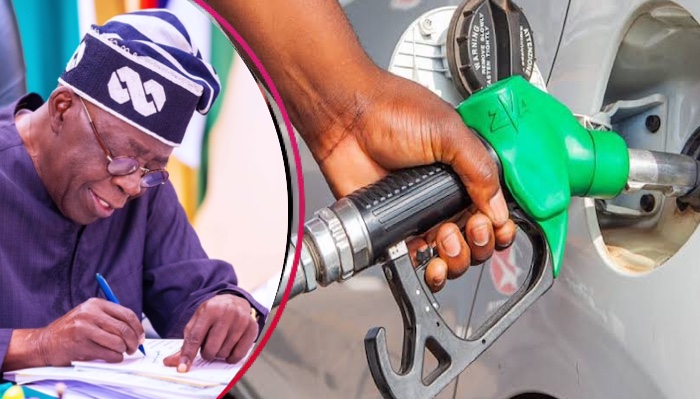
15% petrol import duty approved by President Tinubu to protect local refineries, stabilise fuel supply, and strengthen Nigeria’s oil economy.
15% petrol import duty has been approved by President Bola Tinubu, marking a significant step in Nigeria’s bid to protect domestic refineries and stabilise the downstream fuel market.
Also read: Sultan of Sokoto on Rising Cost of Injustice
The directive, formalised in a letter dated October 21, 2025, instructs the Federal Inland Revenue Service (FIRS) and the Nigerian Midstream and Downstream Petroleum Regulatory Authority to implement the tariff immediately as part of a “market-responsive import tariff framework.”
The approval follows a proposal from FIRS Executive Chairman, Zacch Adedeji, who highlighted the need to align import costs with domestic refining realities and support ongoing energy reforms.

“The core objective of this initiative is to operationalise crude transactions in local currency, strengthen local refining capacity, and ensure a stable, affordable supply of petroleum products across Nigeria,” Adedeji stated.
The FIRS boss noted that price instability persists due to the misalignment between local refineries and import parity pricing. Imported fuel often undercuts domestic producers, putting pressure on emerging refineries and discouraging investment.
Under the new framework, the 15% import duty is projected to raise the landing cost of petrol by approximately N99.72 per litre, nudging imported prices closer to domestic cost-recovery levels without severely affecting consumer prices.
Lagos pump prices are estimated at around N964.72 per litre ($0.62), remaining lower than regional averages in Senegal ($1.76), Cote d’Ivoire ($1.52), and Ghana ($1.37).
The measure also aims to support Nigeria’s strategic push to reduce reliance on imported petroleum products, especially as large-scale facilities like the 650,000 barrels-per-day Dangote Refinery in Lagos ramp up diesel and aviation fuel production. Modular refineries in Edo, Rivers, and Imo states have also begun small-scale petrol refining.
Also read: Top North-Central Politician: AbdulRahman AbdulRazaq
Despite these developments, petrol imports still satisfy roughly 67% of national demand, underscoring the importance of the new 15% petrol import duty in ensuring a level playing field for local producers and encouraging investment in domestic refining capacity.


