


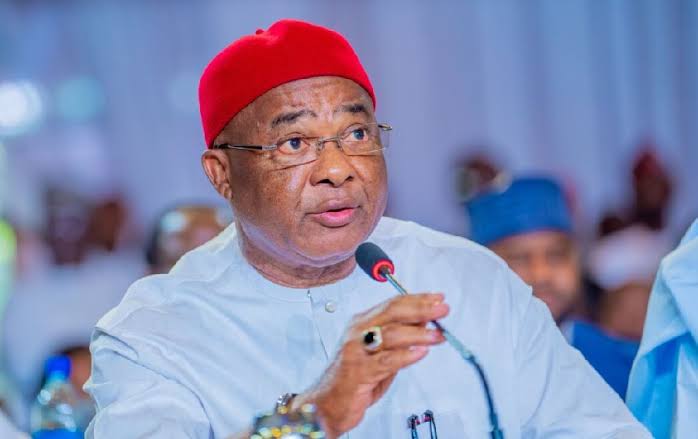
Hope Uzodimma defends Tinubu’s fuel subsidy removal, saying it freed up resources for states despite the hardship experienced by Nigerians
Imo State Governor Hope Uzodimma has defended President Bola Tinubu’s decision to remove the petrol subsidy, describing the policy as necessary in the national interest despite the financial hardship it has caused many Nigerians.
Also read: JAMB to Refund UTME Fees for Candidates With Disabilities
Uzodimma said on Wednesday that although the removal initially increased pressure on household budgets, it had freed up resources for the 36 states and the Federal Capital Territory to invest in infrastructure and development.
The governor spoke at the Global Alliance World Public Relations Forum in Abuja, where he discussed the importance of effective communication in implementing government policies and maintaining public confidence.
He said administrations must sometimes take difficult decisions whose benefits may not be immediately visible to citizens, particularly when introducing major economic reforms.

Drawing on the experience of the Tinubu administration, Uzodimma said the removal of the petroleum subsidy demonstrated the challenges of implementing policies that initially impose additional costs on the public.
“We all saw this with the removal of the petroleum subsidy. The petroleum subsidy was meant to help ordinary Nigerians. But most of the benefits ended up with intermediaries in the sector.
“President Bola Ahmed Tinubu, his administration had to put an end to the subsidy regime because it was the right thing to do in the overall interest of our country,” he said.
The Imo governor recalled that Nigerians across different sectors had previously called for the subsidy to be removed, arguing that the savings from the policy had increased the funds available to state governments and the Federal Capital Territory.
He nevertheless acknowledged that the resulting increase in prices had created difficulties for many families.
Uzodimma stressed that governments must explain the reasons behind difficult policy decisions and show citizens how they stand to benefit from the changes.
To illustrate his point, he cited a hypothetical transport policy in Owerri, where introducing modern buses with affordable fares could reduce commuting costs for workers, traders and students.
However, he noted that such a policy could also affect commercial drivers by reducing their earnings.
According to him, affected drivers could adapt by operating shuttle services, providing car hire services or serving routes not covered by the government buses.
He said the example demonstrated the need for governments to consider the different groups affected by their policies and communicate with them to build understanding and public trust.
“But as a government, our duty is to spread the good as widely as we can, and to communicate our intentions, our purposes and goals to those who must bear some pain along the way,” he said.
Uzodimma added that clear communication would help affected citizens adjust to policy changes, particularly when they trusted government assurances that the hardship would eventually ease.
He said public confidence could not be built through occasional announcements but required continuous and honest engagement with citizens.
“Achieving these takes consistent communication. You will need to keep communicating honestly and effectively with the people until they trust you,” he added.
Speaking on responsible governance and public relations, the governor said he hoped to be remembered as a leader who was sensitive and responsive to the needs of the people.
Also read: JAMB to Refund UTME Fees for Candidates With Disabilities
He also referred to the Nigerian Institute of Public Relations’ adoption of a new definition of public relations in December, saying it positioned the profession as a strategic leadership function.


