


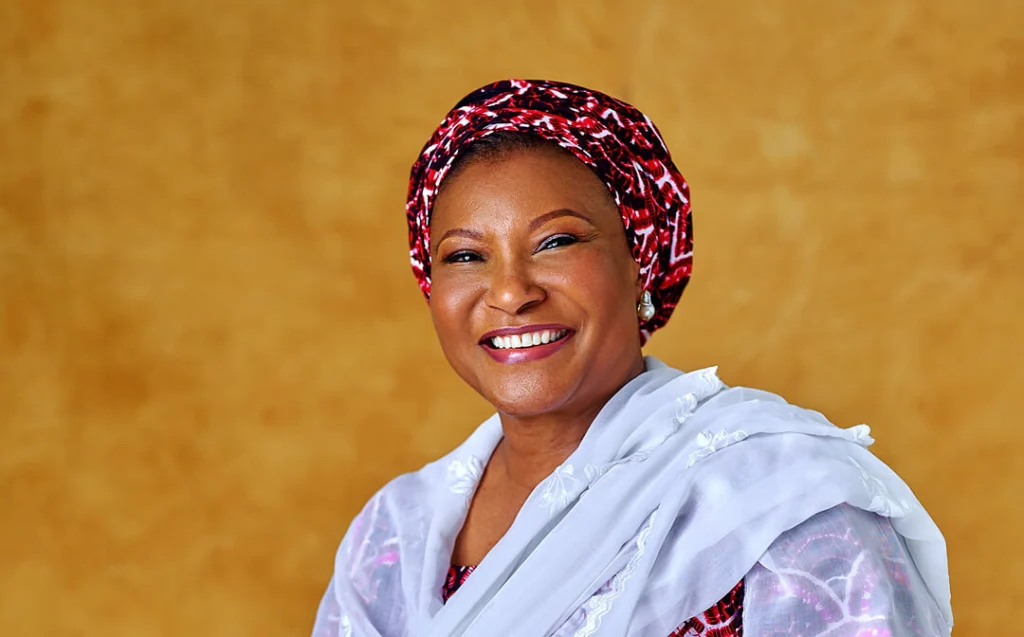
Kingibe urges INEC to remain independent and ensure Nigeria’s 2027 elections reflect the will of voters as the country marks 66 years of independence
Senator Ireti Kingibe, who represents the Federal Capital Territory, has urged the Independent National Electoral Commission to maintain its independence and ensure Nigeria’s 2027 general elections accurately reflect the choices of voters.
Also read: Baba-Ahmed Warns Opposition Over 2027 Legal Battles
Ireti Kingibe made the appeal in an Independence Day statement on Wednesday, saying the significance of Nigeria’s independence was closely tied to citizens’ ability to choose their leaders through credible elections.
The senator said electoral integrity should remain a central responsibility as Nigeria prepares for another general election.

“I wish to use the opportunity offered by this annual event to passionately appeal to INEC to be truly independent in action and name by conducting the 2027 General Elections in a manner that would reflect the will of the people,” Ireti Kingibe said.
Her appeal comes as political parties and potential candidates intensify preparations for the 2027 elections, with questions about electoral credibility, voter participation, security and institutional independence already forming part of the national political conversation.
Ireti Kingibe also called on security agencies, political leaders, voters and young Nigerians to perform their constitutional responsibilities during the electoral process.
“I also appeal to security agencies, political leaders, the electorates and the youth to play their respective constitutional roles at the elections, noting that the entire world is watching us,” she said.
The senator linked the credibility of elections to the broader meaning of Nigeria’s independence.
For Ireti Kingibe, political independence cannot be fully realised if citizens are unable to exercise meaningful choice at the ballot box.
Her message therefore placed electoral participation within the wider question of democratic governance.
INEC is constitutionally responsible for organising and conducting federal and state elections in Nigeria, including presidential, National Assembly, governorship and State House of Assembly elections.
The commission has previously stressed the importance of transparent electoral processes, while successive elections have generated debate over voter accreditation, result transmission, logistics, security and the conduct of political actors.
The 2027 election will also take place against the backdrop of lessons from the 2023 general elections, when INEC introduced the Bimodal Voter Accreditation System and the electronic transmission of results as part of efforts to strengthen electoral transparency.
The 2023 presidential election was won by Bola Ahmed Tinubu of the All Progressives Congress, while Atiku Abubakar of the Peoples Democratic Party and Peter Obi of the Labour Party challenged the result in court.
Nigeria’s Supreme Court subsequently upheld Tinubu’s victory in October 2023.
As preparations for 2027 gather momentum, opposition parties have increasingly focused on the credibility and independence of electoral institutions.
The African Democratic Congress has emerged as a major platform within an evolving opposition coalition, with former Vice-President Atiku Abubakar selected as its presidential candidate and former Rivers State governor Rotimi Amaechi as his running mate.
Other political actors have also begun publicly discussing the conditions required for a credible contest, including the conduct of INEC, the neutrality of security agencies and the ability of voters to make choices without intimidation.
Ireti Kingibe’s intervention adds the voice of a serving federal legislator to those calls for institutional independence.
Her appeal was also directed beyond INEC. By specifically mentioning security agencies, political leaders, voters and young Nigerians, she placed responsibility for credible elections across the political system rather than solely on the electoral commission.
Security will be particularly important during the 2027 elections because electoral violence, intimidation and disruptions can affect both voter participation and the ability of election officials to operate effectively.
Young Nigerians are also expected to remain an important part of the electorate, making Kingibe’s call for youth participation particularly relevant as parties develop their campaign structures and voter mobilisation strategies.
The senator did not endorse any candidate or political party in her Independence Day statement.
Instead, her message centred on the institutional conditions required for citizens to exercise their electoral rights.
Her remarks also reflect the significance of the 66th Independence anniversary as a moment for considering how Nigeria’s democratic institutions have developed since independence in 1960.
Nigeria’s electoral system has undergone several major changes over the decades, moving from the country’s early post-independence contests through periods of military rule and eventually back to sustained civilian government from 1999.
The durability of that democratic transition has increasingly been measured not only by the holding of elections but also by the credibility of the process, the independence of institutions and the acceptance of lawful electoral outcomes.
For Ireti Kingibe, the 2027 election provides another opportunity to demonstrate those principles.
Her message is ultimately a call for INEC to place voters at the centre of the electoral process and for all other stakeholders to respect their constitutional responsibilities.
Also read: Baba-Ahmed Warns Opposition Over 2027 Legal Battles
With the next general election approaching, the effectiveness of those institutions and the conduct of political actors will be closely scrutinised by Nigerians and international observers.


