


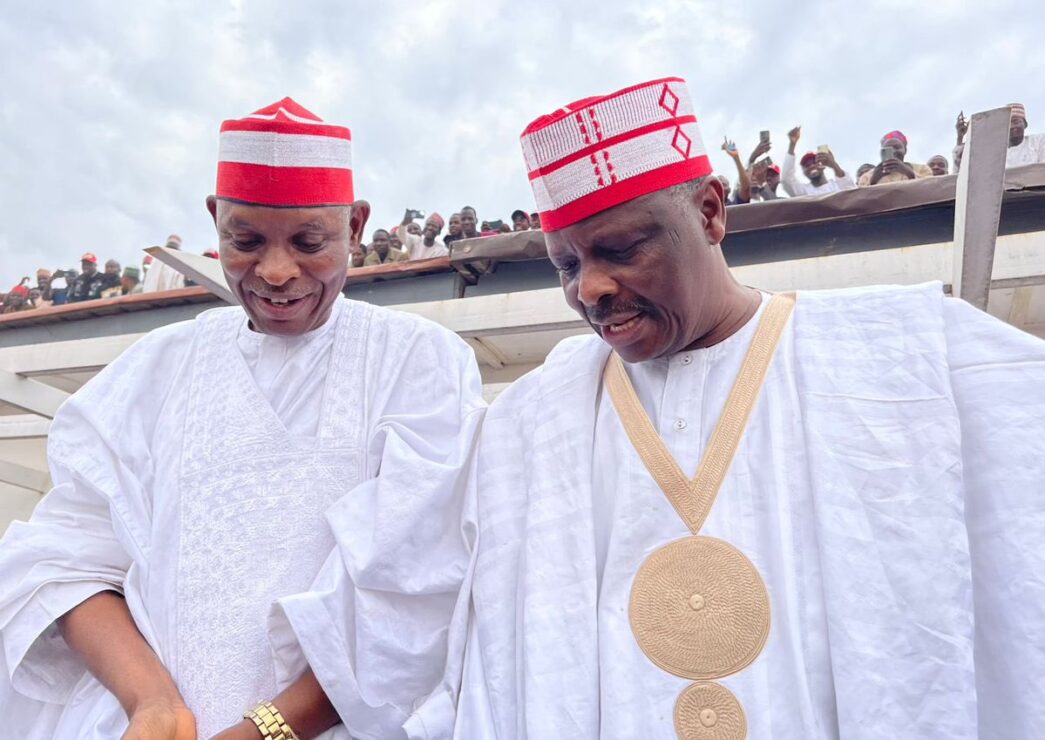
Senator Kwankwaso calls Kano Governor Abba Kabir Yusuf’s political realignment betrayal, igniting debate over governance strategy and political loyalty
Senator Rabiu Musa Kwankwaso has declared Kano State Governor Abba Kabir Yusuf’s political realignment toward the All Progressives Congress as an act of “betrayal,” prompting controversy and a wave of public debate across the state.
Also read: NNPP Says Kwankwaso Feels Betrayed by Kano Governor’s Defection
Kwankwaso’s pronouncement coincides with what he termed “Betrayal Day,” a symbolic marking of the governor’s decision, which he claims undermines the trust of the electorate who voted for the NNPP in 2023.
Observers, however, note a historical irony.

Kwankwaso himself has faced accusations of political abandonment during the February 23, 2019 presidential elections, when opposition cohesion under former Vice President Atiku Abubakar reportedly fractured.
Critics argue that the senator’s current moral framing mirrors the same dynamics he was once associated with.
Political analysts stress that realignment within Nigeria’s Fourth Republic is common and often driven by governance imperatives rather than personal ambition.
Kano’s complex political history spanning NEPU, PRP, PDP, ANPP, APC, and NNPP reflects a long-standing pattern of strategic repositioning.
Supporters of Governor Yusuf argue that his shift toward the ruling party is rooted in developmental pragmatism.
Aligning with the federal government, they contend, is essential for Kano to secure support for mega projects, including rail corridors, power investments, industrial development, and youth employment initiatives.
“The governor’s decision is a governance strategy, not betrayal,” said a political commentator in Kano.
“Centre-state synergy is critical for delivering tangible benefits to citizens.”
Critics of Kwankwaso’s statement note the contradiction of decrying betrayal while having faced similar accusations in 2019.
Many argue that the debate should focus on delivery and public service outcomes rather than symbolic gestures.
Ultimately, Kano voters are expected to weigh tangible development against political theatre.
Analysts suggest that the success of Yusuf’s realignment will be measured by improved infrastructure, security, and investment outcomes rather than declarations of loyalty or betrayal.
Also read: Keyamo Says Kwankwaso Faces Tight Political Corner Ahead of 2027
Dr. G. Fraser of the National Patriots concludes that history will remember effective governance, not the ceremonial labelling of political decisions.


