


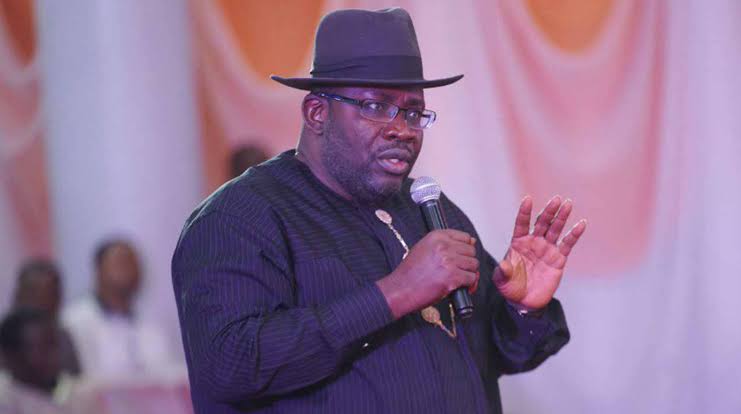
Seriake Dickson NDC clarification comes as the party prepares for 2027, with Dickson rejecting Obidient and Kwankwasiyya labels
Seriake Dickson, national leader of the Nigeria Democratic Congress, NDC, said in Lagos on Wednesday, September 9, 2026, that he is neither a member of the Obidient movement nor the Kwankwasiyya movement, but belongs to the NDC as the party prepares for Nigeria’s 2027 general election.
Also read: APM Demands Probe Into Peter Obi Convoy Blockage
Dickson made the clarification during an interview on Arise Television’s Prime Time, where he addressed the relationship between the NDC and the political movements associated with the party’s leading figures, Peter Obi and Rabiu Kwankwaso.
The former Bayelsa State governor said the Obidient and Kwankwasiyya movements retain their own identities, but argued that their principal figures are now operating within the NDC’s political structure ahead of the election.
“First of all, I’m not a member of Kwankwasiyya, and I’m not a member of Obidient. I’m NDC,” Dickson said.

Dickson’s comments come as opposition figures seek to build a broader political platform capable of challenging the governing party in 2027.
The distinction between the NDC and the two political movements is significant because both Obidient and Kwankwasiyya have developed strong identities around Obi and Kwankwaso respectively.
Obi, a former governor of Anambra State and 2023 presidential candidate, has retained a substantial support base popularly known as the Obidient movement.
Kwankwaso, a former governor of Kano State and former presidential candidate, is associated with the Kwankwasiyya movement, which has maintained a particularly strong presence in northern Nigeria.
Dickson said the separate identities should not be mistaken for divisions within the NDC.
“These candidates, Peter Obi and Kwankwaso, and other candidates, none of them are running as independents, they are running on the NDC,” he said.
The NDC national leader also pointed to his longstanding relationship with both men, saying political cooperation between the three figures was not a recent development.
Dickson said he had held several meetings with Obi and Kwankwaso over the years and described both men as colleagues, partners and friends despite periods when they belonged to different political parties.
The relationships, according to Dickson, provide a basis for the present political partnership as the opposition prepares for a difficult electoral contest.
“I have held several meetings with them and even before now, we used to meet over the years. We have been colleagues and partners and friends,” he said.
Dickson said the immediate priority should be electoral preparation rather than disputes over individual political identities.
The former governor argued that members of the party should concentrate on presenting their political case to Nigerians and building the organisation required to compete effectively across the country.
“There are no internal battles to fight in the NDC. The next stage of the battle strategically is to win the election,” Dickson said.
His remarks underline the strategic challenge facing the new political platform.
While the involvement of prominent opposition figures could give the NDC considerable political reach, bringing together established movements with their own loyal supporters may require careful management of competing identities and expectations.
For the NDC leadership, maintaining a distinction between party membership and movement affiliation could therefore become increasingly important as the 2027 campaign develops.
Dickson’s comments also suggest that the party does not intend to suppress the individual identities surrounding its leading candidates.
Instead, the emphasis appears to be on using those established support networks within a common electoral structure.
The approach could allow the NDC to draw on the political energy associated with both the Obidient and Kwankwasiyya movements while presenting a single party platform to voters.
The immediate focus, however, remains the election itself.
Dickson said candidates and party members should take their arguments directly to Nigerians, signalling a shift from negotiations over political alignments towards grassroots mobilisation and electoral preparation.
The 2027 election is expected to produce another closely watched contest, with opposition parties and political movements seeking to consolidate their strength before the formal campaign gathers momentum.
For Dickson, the message is straightforward: personal political relationships and movement identities may remain important, but the NDC is the platform on which the party’s candidates will seek the mandate of Nigerian voters.
Also read: APM Demands Probe Into Peter Obi Convoy Blockage
As preparations intensify, the ability of the NDC to maintain cohesion while accommodating the distinct political identities of its leading figures could become one of the defining tests of its 2027 campaign.


