


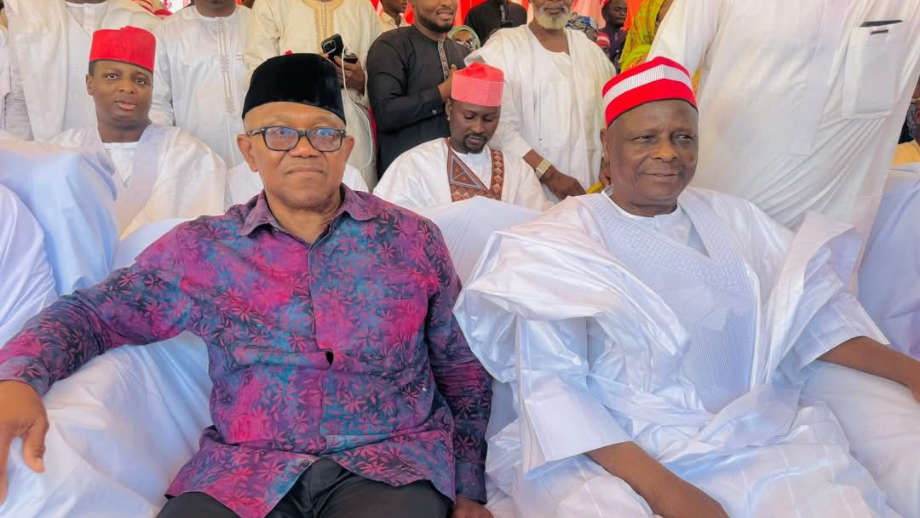
Obi Kwankwaso NDC Rift Claim emerges as Bashir Ahmad says both politicians may leave NDC if expectations are not met
Former presidential aide, Bashir Ahmad, has claimed that Nigeria Democratic Congress flag bearer, Peter Obi, and his running mate, Rabi’u Kwankwaso, may dump the party if their expectations are not met, in remarks that have added fresh tension to discussions around the party’s internal cohesion ahead of the 2027 elections.
Also read: NDC Strengthens Communications Team With New Media Appointments
Alleged NDC rift involving Obi and Kwankwaso was made in a post shared on Ahmad’s verified X handle, where he suggested that both politicians view the NDC primarily as a platform for the 2027 general election rather than a long-term political structure.
According to him, differing political timelines and ambitions between the party’s national leadership and its high-profile candidates could create challenges in sustaining unity within the emerging political arrangement.

Ahmad argued that while Seriake Dickson, the party’s national leader, is focused on building a long-term political project potentially aimed at the 2031 presidential cycle, Obi and Kwankwaso are driven by immediate electoral objectives.
“If Obi and Kwankwaso’s expectations are not realised within the party, they will definitely move on to another platform ahead of the 2031 for the same reason,” Ahmad wrote.
He further suggested that such differences could make it difficult for all parties to maintain alignment beyond the short term, particularly if electoral expectations are not met.
Neither Peter Obi nor Rabi’u Kwankwaso has publicly responded to the comments at the time of filing this report.
Political analysts note that emerging coalitions are increasingly being tested by competing ambitions, with parties attempting to balance immediate electoral gains against longer-term political structures.
Also read: Lawyer Issues Legal Warning Over Enugu NDC Primary Crisis
As preparations for the 2027 elections continue, attention remains focused on how such alliances evolve and whether internal disagreements will affect their stability


